
Is the global economy heading toward an uninsured future
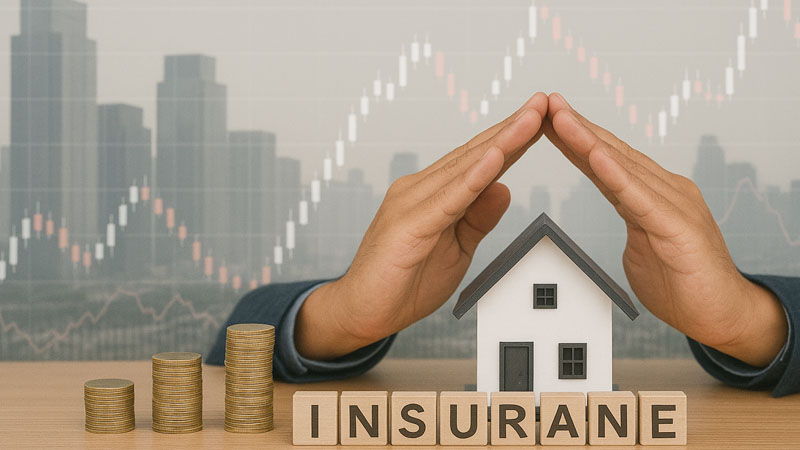
Raj Kiron Das: Modern economic life depends on a quiet but powerful promise: when unexpected loss strikes, it will not destroy everything that came before it. Insurance is the mechanism that makes this promise credible. It allows households to recover, businesses to take calculated risks and markets to function with confidence. Yet across the world, that foundation is beginning to weaken. The greatest threat is not the disappearance of insurance itself, but the steady erosion of affordable, meaningful protection.
Insurance is often misunderstood as a simple economic product. In reality, it is financial infrastructure. It transforms uncertainty into stability and enables long-term decision-making. Mortgages rely on it, trade depends on it and investment flows assume its presence. When insurance becomes inaccessible or inadequate, risk does not disappear. It shifts onto individuals, small enterprises and public institutions that lack the capacity to absorb major shocks.
This shift is already unfolding. Climate volatility, health crises, legal complexity and geopolitical uncertainty are increasing the scale and unpredictability of losses. In response, insurers are tightening coverage, raising barriers to entry and retreating from high-risk areas. For many people and businesses, insurance technically exists but no longer offers real security. The result is an increasing protection gap that leaves economic actors exposed at the moment they are most vulnerable.
The consequence extends far beyond the insurance sector. Housing markets depend on reliable coverage to support lending and preserve value. When insurance deteriorates, investment slows and communities become fragile. Healthcare system relies on shared risk to control costs and maintain access; without it, economic strain spreads quickly through society. In the business world, insurance underwrites innovation by limiting downside risk. Without that buffer, entrepreneurship becomes cautious, employment growth slows and productivity suffers.
What makes this trend especially dangerous is its gradual nature. There is no single crisis that announces an uninsured economy. Instead, recovery from disasters becomes slower, inequality deepens as only the wealthy can self-protect and governments are forced to step in after losses occur. Over time, this strains public finances and erodes trust in economic systems.
Avoiding this future needs treating insurance as a public priority rather than a peripheral industry. Investment in resilience, smarter planning and loss prevention must be seen as economic strategy. Regulation should balance realistic risk assessment with social inclusion, ensuring protection remains broadly accessible. Above all, extreme risks must be shared rather than shifted.
Insurance is ultimately about confidence in tomorrow. An economy that cannot protect itself against uncertainty will hesitate to grow, innovate and invest. Preserving insurance as a pillar of stability is not optional. It is necessary to sustain financial progress in an increasingly uncertain world.



.jpeg)