
Is climate insurance protection in Bangladesh sustainable
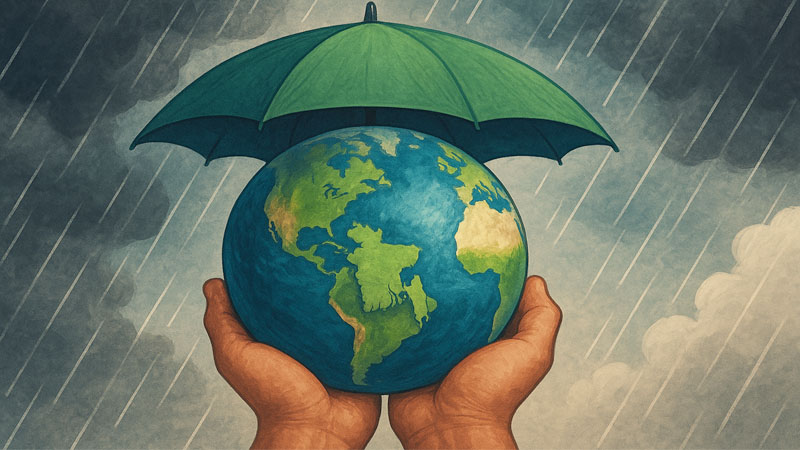
Raj Kiron Das: Climate change has decisively shifted from an environmental concern to a structural economic challenge, reshaping how societies manage risk, recovery and long-term stability. Extreme weather events are becoming more destructive and less predictable across the globe, placing unprecedented pressure on insurance systems designed for a different era. In countries such as Bangladesh, where climate exposure is a constant reality rather than an occasional shock, the sustainability of insurance safeguard has emerged as a defining policy question.
Insurance functions on the assumption that risk can be anticipated and shared. This assumption is increasingly difficult to uphold. Climate-driven disasters no longer follow reliable historical patterns, decreasing the accuracy of risk assessment and undermining confidence in premium pricing. As uncertainty grows, insurers face difficult trade-offs between economic viability and social responsibility. The result is often reduced coverage, higher cost, or the quiet withdrawal of protection from the most exposed areas.
Bangladesh stands at the frontline of this crisis. Recurrent flood, intensifying cyclone, river erosion and coastal inundation repeatedly damage home, farmland and small businesses. Yet insurance remains marginal in the country’s disaster response landscape. Most people absorb losses through personal savings, informal borrowing, or delayed public assistance. This reliance on coping mechanisms rather than protection slows recovery and deepens vulnerability, ensuring that climate shock turns into long-term economic setbacks rather than temporary disruption.
The core challenge for Bangladesh’s insurance sector lies in balancing increasing risk with limited affordability. Climate hazard raises the cost of coverage precisely in communities least able to pay. Traditional insurance model struggles to bridge this gap. When premiums reflect real risk, they exclude a large segment of the population. When they do not, insurers face unsustainable losses. This tension has constrained the role of insurance as a tool for resilience, leaving it underutilised despite its potential to stabilise livelihood and protect development gain.
Policy choices will determine whether this situation persists. Allowing the market to run without guidance risks making protection deserts in high-risk regions, reinforcing disparity and geographic exclusion. At the same time, heavy-handed regulation could discourage insurers from innovation and long-term engagement. Bangladesh needs a more integrated strategy that connects insurance with climate adaptation and disaster risk reduction. Investment in resilient infrastructure, effective early warning systems, safer housing and adaptive livelihood reduce overall risk, making insurance both more affordable and more sustainable.
In this framework, insurance must be recognised as a component of public resilience rather than a purely commercial product. Collaboration between management, insurers, development partners and local communities is necessary to design coverage that reflects climate realities while remaining accessible. Innovative approaches tailored to agricultural cycles, informal economy and climate-sensitive livelihood may help extend protection beyond a narrow, urban-based market.



.jpeg)