'We need a solution where the company survives and policyholders’ claims are also paid'
There has long been a crisis in Bangladesh’s insurance sector regarding the settlement of policyholders’ claims. Many policyholders go from year to year without receiving their rightful dues. In this situation, the Insurance Development and Regulatory Authority (IDRA) has taken proactive steps on its own initiative regarding claim settlement. The current Chairman has given special importance to claim payments after taking office. The government is also emphasising the settlement of policyholders’ claims.
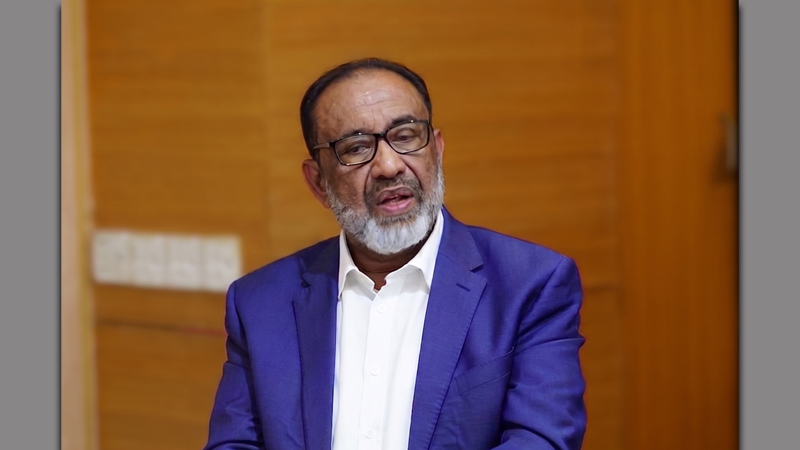
On this initiative, the capacity of companies to pay claims, Progressive Life’s outstanding claims, paid-up policies, allegations of money being diverted from the company, the role of the regulator, the shortage of skilled manpower, the risks of breaking investments to pay claims, and reforms in the insurance sector- Progressive Life Insurance Company’s Chairman Bajloor Rashid spoke in an interview.

Question: After the current Chairman of IDRA took office, she has taken the initiative on her own to settle policyholders’ insurance claims. She is trying to resolve the crisis surrounding claim payments. The Hon’ble Finance Minister has also said that policyholders’ claims must be paid somehow. How do you view this initiative of the present government? How optimistic are you?
Bajloor Rashid:
I welcome the new Chairman’s intention. Because many companies are not paying claims. We, however, have been regularly paying claims.
Perhaps there are many reasons behind our situation. There has been a lot of misappropriation from here; a lot of money has gone. That money belonged to the policyholders.
We have been regularly paying policyholders’ money by breaking FDRs and treasury bonds. Of the regular business we do, we have been paying nearly 90 per cent of the renewals every month. The Board is also regularly supporting us. Whether it is FDR or treasury bonds, we are working to break them and pay the policyholders.
So the initiative that the IDRA Chairman has taken is something we had already been doing. Now she is implementing it with even greater force on us.
Question: IDRA wants to take the initiative of selling the company’s assets to pay policyholders’ money. Are you working with IDRA in this regard?
Bajloor Rashid:
We will try to save the company by working together with the regulator.
She wants to sell assets to pay policyholders’ money. Selling assets is not an easy matter. But we are following whatever they are saying.
We have also issued advertisements for the sale of assets. Advertisements have been published in the market and tenders will be held on a specific date. But selling assets is not a simple process.
Question: Is there any other path besides selling assets for claim settlement? Have you found any alternative path?
Bajloor Rashid:
So far, we have not found any effective alternative path.
However, I agree with you that if the government breaks all the treasury bonds and pays them out, the company will collapse and will not be able to run.
The correct step would be to ensure how the company will survive and how claims will also be paid. That is, we have to kill the snake without breaking the stick. The company has to be brought within the system.
Question: You were previously Chairman of Progressive Life. How do you view the company’s present situation?
Bajloor Rashid:
I was previously Chairman of Progressive Life Insurance Company. I am a sponsor. At one time, the management used to run the company. Many of our directors were also involved here.
A lot of money has been diverted from here. But this is not only the fault of the directors. It happened because of a system failure.
By creating division or disorder among the directors, the management took advantage of it. From the management down to the field level, hundreds of crores of taka have gone from various places.
Question: The IDRA Chairman says many companies are not paying claims. How much claim money have you paid?
Bajloor Rashid:
It is being said about us that we are not paying claims. But we are paying claims.
I calculated last night. We have so far paid approximately 741 crore taka in claims.
Question: What is your current outstanding claim amount?
Bajloor Rashid:
Our current outstanding claim amount was, at one time, about 159 crore taka. That may be the figure from one month, one and a half months, or two months ago.
Now, since claims are regularly increasing and we are also paying them, it may currently be 180 to 190 crore taka. But this is an ongoing process.
At the time of IDRA’s recent initiative, we paid about 6 crore 90 lakh taka.
Question: What kinds of claims are you planning to settle next?
Bajloor Rashid:
We want to fully clear all the death claims, SBs, and surrender values that we have within the next week.
After that, we want to settle the full maturity claims gradually as well.
According to our management’s calculation, it may be at least about 55 crore taka — but that is not the only issue. There is another big issue, and that is paid-up policies.
Question: Why are you talking so much about problems with paid-up policies?
Bajloor Rashid:
Paid-up has become a big problem for us.
We have about 132 crore taka in paid-up policies. Of the total 159 crore taka I mentioned earlier, about 132 crore includes full maturity, SB, surrender value, death claims, etc.
However, everyone must be very careful about paid-up.
Paid-up is not always a genuine policy. Often someone takes a policy. Various amounts including the first year’s commission are taken. Later, it is found that the policy is not renewed the next year.
After a few days, two years or four years, our office or management again takes an extra percentage and turns it into a paid-up policy.
Sometimes it is seen that with one payment, two payments are shown and it becomes paid-up.
In my view, if payments for paid-up policies have to be made, they must be made with great caution. Because it is necessary to properly verify whether the money for those claims is always going to the genuine policyholders.
I want to caution everyone on this matter. The regulatory body also needs to understand that paid-up is a huge problem.
We examined many policies again yesterday. On examination, it was found that most of the policies are paid-up.
Question: What kind of problems is this creating?
Bajloor Rashid:
Regular policies are decreasing sharply.
Why are they decreasing? Because some people are getting benefits on that side, but the genuine policyholders are not getting their benefits.
For this reason, the matter has to be looked at with great importance.
Question: How much is your investment? How much of the current investment can be liquidated for claim settlement?
Bajloor Rashid:
Our government treasury bonds were over 100 crore. At one time, it was about 117 crore taka.
We have encashed some of it. For the latest claims we paid, we had to encash about 7 crore taka.
Question: Does breaking investments cause financial loss to the company?
Bajloor Rashid:
Of course it does.
When you make an FDR or bond for the long term, say for five or ten years, if you break it before maturity, you do not get the full interest that was due.
When we encashed about 7 crore taka, a portion of the savings interest was also deducted. Because after calculating, we saw that if we encash the money that way, we will suffer a loss of about 80 lakh taka.
Now, next week we want to pay seven and a half crore taka in claims to fully clear SB, surrender and death claims.
IDRA has told us to cash 10 crore taka. But we could not cash 10 crore taka. We have cashed seven and a half crore taka.
That loss is also the company’s loss. Yet the company runs on the profit and interest that comes from investments.
Question: If all investments are liquidated to pay claims, will the company survive?
Bajloor Rashid:
No. I do not think this is the correct solution.
If everything goes, the profit and interest that come to the company are what run our company. If these decrease completely, the company will not run.
Therefore, breaking all investments is not the correct solution.
To make IDRA’s new initiative successful, work has to be done together with the insurance company.
Question: IDRA has arranged auditors to verify your claim payment accounts. How do you view this?
Bajloor Rashid:
We have welcomed this.
There will be a separate account for all the claims we pay. From that account the auditors will audit how much claim payment is being made for which policy.
We will also bear the auditors’ expenses.
This has been imposed on us by IDRA. But we have welcomed it because it will ensure transparency.
If IDRA pays attention to this matter, that is very good.
Question: Then what is the problem if assets, bonds and FDRs are all liquidated?
Bajloor Rashid:
If you liquidate all assets and all bonds, what will be the future of the company?
Our company is 26 years old. Many people work here. Not only in Dhaka- there is employment across the country.
What will happen to their livelihood?
Then there are our future policyholders. Their policies will mature in the future. If the company collapses, who will pay their claims?
There are public shareholders here. There are many other stakeholders. Everyone will be harmed.
Therefore, it has to be done in such a way that the company both pays claims and also stands up again.
Question: You have also spoken about the shortage of skilled manpower in the insurance industry. How is this creating a crisis?
Bajloor Rashid:
There is a severe shortage of skilled people in our industry.
Without skilled people, policy development does not happen properly. Underwriting also does not happen correctly.
You will see that underwriters in our country are not very expert.
Similarly, there is a big shortage of actuaries.
There are so many life insurance companies in Bangladesh, but the number of skilled actuaries is very small. I personally know one actuary, Mr. Sourav. Against so many companies, the number of skilled actuaries is extremely low.
That is why I will keep saying that there is a severe lack of supervision here.
Question: How is the “system loss” you talk about happening?
Bajloor Rashid:
There are many reasons for system loss.
Field people are taking advantage of the system in many places. IDRA has many guidelines that are not being properly followed everywhere.
Again, many guidelines have become outdated.
For various reasons, the management is not looking at these properly. Policies are coming incorrectly from the field level; underwriting is not being done correctly.
As a result, crores of taka are flowing out of the company.
We ourselves have recently examined some policies. We have also seen how paid-up is being made even in the case of death claims.
The tendency that has been created of making paid-up policies by combining the field and management is a big problem for the entire industry.
Fully running policies have decreased a lot. Insurance people are moving towards paid-up for various reasons. I think paid-up is now a big problem.
Question: On the one hand, policyholders’ claims have to be paid, on the other hand the company’s financial capacity also has to be maintained. How will you balance the two?
Bajloor Rashid:
Look, the IDRA Chairman Madam is saying, these are all policyholders’ money. You have kept government treasury bonds, so why are you not paying claims with that money?
We say, Madam, if we give away all the money, our company will not run.
We have taken a two-year plan. If we pay five crore a year, 60 crore will go in one year, then we will be able to move towards an ideal situation.
But we are not in an ideal situation now.
She is saying that business money cannot be used for future claims; these have to be kept in FDRs for future claims.
But our present situation is not ideal.
Out of 36 life insurance companies, about 26 companies are in problems with claims. Why this happened has to be identified first.
It cannot be said that this has happened only because of running the company.
From the regulator to the company, management, directors, board, everyone has to take responsibility. Even those involved with development are responsible for this.
Question: Then what is the problem if all companies are viewed in the same way?
Bajloor Rashid:
Not all companies have the same financial capacity. Not all companies’ businesses are the same. Therefore looking at all companies in a blanket manner will not solve the problem.
I also told Madam last week that by selecting the seven companies first, a bad name is being created for us in the market that we are very bad.
But among those seven I do not see our company that way.
If you look at our life fund, we are positive. You yourselves said in the first meeting that our investment is positive.
Our claims may be 160–170 crore taka, but we have investments of over 200 crore.
Therefore, we should not be viewed in the same way as other companies.
The company that has problems has to be looked at separately. It has to be seen on a case-to-case basis. Looking at everyone on an average will not work.
Question: What kind of problems are you facing because of being kept together with the seven companies?
Bajloor Rashid:
We are a bit uncomfortable.
If we are compared with those seven companies, we feel we are in a much better position. But because of being in the same category we are moving into a negative position.
Companies that are not negative have to be separated. Those whose problems are greater have to be looked at accordingly.
It has to be seen separately on a case-to-case basis. That is my point.
Question: Policyholders keep their accumulated money in life insurance companies. If a crisis is created in one company, its effect falls on other companies as well. Has this affected your business?
Bajloor Rashid:
It is having a massive effect on business.
Because it is being said that we have gone into the red category. But we do not consider ourselves red.
IDRA included us among the seven companies with which it first got claim payments made. Through this a perception has been created in the market that we are also in the red.
I have written a letter to the IDRA Chairman. In it I have said that after making all kinds of comparisons we have seen that we should not be in the red.
I have asked which criteria were used to place us in this category. But I have not yet received a reply to that letter.
Question: Is this kind of decision causing you further losses?
Bajloor Rashid:
Yes, massive losses are occurring.
I want that the company somehow be brought up and all claims be made up to date. I want to build the company as a smart and transparent company.
Our goal is to work together with IDRA.
But because of the present method we are being obstructed.
Question: The system that has been started of policyholders receiving claim payments at the IDRA office, can this have any negative impact in the future?
Bajloor Rashid:
I think the matter needs to be properly examined.
If today we go to sell policies, and in the future policyholders think that to receive a claim they will have to go to the IDRA office, then people’s confidence in insurance companies may decrease.
There is a provision in the Insurance Act on this matter. If a company does not have the capacity to pay claims, it has to submit a plan within a specified time on how it will settle the claims.
Therefore a plan needs to be made after discussion with the company.
Question: Has IDRA asked you for any claim payment plan?
Bajloor Rashid:
Yes, they ask us for plans. We give plans. They always ask for plans.
But the problem is that if the plan we have given is not correct, we often do not get advice on how it needs to be corrected.
We are told, do it this way, do it that way, but detailed practical guidelines are not given. Mainly, we are often scolded.
Question: Can the regulatory body work only by scolding?
Bajloor Rashid:
I do not know how the system is running in Bangladesh.
If the regulator always remains in a mode of scolding, there will be no solution.
They can take any legal action against us if we make a mistake. But just scolding will not solve the problem.
Correct guidelines have to be given.
Because in the name of IDRA itself there are two things- “development” and “regulation.”
Question: Then how should the evaluation of IDRA as a regulator be done?
Bajloor Rashid:
Individual insurance companies have to be looked at, who is running the company, what their intention is, how they are managing the company.
This intention and management should be properly analysed.
Question: Why are you personally giving so much time to resolving this company’s crisis?
Bajloor Rashid:
I have dedication. I am not working for my own profit.
I am working so that those who will have claims in the future are not deprived.
The public shareholders here should not be harmed. Those who are working here should keep their jobs. When one person has a job, a family is connected with them. Everyone’s responsibility has to be considered. We have to look a little positively.
Question: Do you think IDRA is forcing you to pay claims?
Bajloor Rashid:
IDRA is forcing us to pay claims. But even if they did not force us, we would have paid the claims.
However, they also have to see how much this forcing is in accordance with the law.
Work has to be done within the law and guidelines. Otherwise their initiative itself will be obstructed in the future and they will not succeed.
And if IDRA does not succeed, we will not succeed either.
Question: What are you doing to recover money from those who were involved in earlier diversion of funds from the company? Has IDRA given any guideline?
Bajloor Rashid:
We are proceeding properly according to the guidelines.
A long time ago IDRA had given us some instructions. We had some cases. In some incidents the Anti-Corruption Commission (ACC) had also written to IDRA that the company should file cases against the concerned persons. But the problem was that some of those against whom cases were to be filed were themselves on the Board. They did not allow all the cases to be filed.
Question: Then how many cases have been filed from your side?
Bajloor Rashid:
Two or three cases have been filed.
One shareholder has also filed a case. In particular, a case has been filed regarding property fraud.
We can mention one property in Aftabnagar. It was purchased in 2011 for about 26 crore taka. At present its value may be 15 crore taka, or it may not be. Yet if the annual increase in property value is considered, its value should have been much higher.
If you calculate what a 26-crore property should be worth after 13–16 years, you will understand. But if we sell it now, whether we will even get 26 crore taka is a question.
Our allegation is that this kind of property was purchased with the intention of diverting money from the company. There is a case with the ACC on this, and there is also a case in court.
Question: Are the ACC or other law-enforcement agencies working properly on these matters?
Bajloor Rashid:
Our allegation is that the ACC is not working properly on these.
We have also told the IDRA Chairman Madam that you can put pressure on the ACC so that appropriate action is taken against them.
Instead of breaking the treasury bonds that we are breaking to pay claims, if the money can be recovered from those who diverted the funds, then that money can be used to settle policyholders’ claims. That is, by taking action against them, seizing property or recovering money according to the law, it can be used for policyholders’ claims.
Question: Is it possible to recover money through criminal cases?
Bajloor Rashid:
There is law.
We had a case in court. In that case the CID submitted a report and framed a charge-sheet.
The CID investigated and found information on the basis of which action could be taken against the accused and charged them under various sections.
At that time it seemed the court could award punishment.
But after a few hearings the court again sent the matter to the ACC.
In this way, the matter keeps going from one place to another.
On the other hand, the ACC has also been sitting for a long time.
Question: Is all the pressure therefore falling on the company?
Bajloor Rashid:
Yes.
We are trying day and night to protect the interests of the company and the policyholders. But regular pressure is being put on us.
Supervision has to be done from other sides of the government as well.
Just putting pressure on the company will not work. Action also has to be taken against those who diverted money from the company.
Question: How is it possible that some of those against whom cases were to be filed are still on the Board?
Bajloor Rashid:
When IDRA instructed us to file cases in court against those who were at fault here, we faced a problem when we went to the Board. Because some of those against whom we were to file cases were still on the Board at that time.
Even then one or two cases were filed by force. But full measures could not be taken.
We have written to IDRA. One shareholder has also filed a case.
But if the concerned persons sit on the Board as directors at the same time, it is difficult for the Board of Directors to take decisions against them.
IDRA is our primary regulator. They also have the power to remove someone from the Board. But so far no action has been taken on this matter.
Question: Will the problem be solved just by telling us to pay claims?
Bajloor Rashid:
No. Just saying “pay the claims, pay the claims” will not work. The company has to be supervised from all sides. I believe in transparency. In my life I have tried to maintain 100 per cent transparency. I want to work together with IDRA. If IDRA considers us from all sides, then we will survive, the policyholders will also survive, and in the future the insurance companies will also succeed.
Question: Why did you leave London and take this responsibility here?
Bajloor Rashid:
I am sitting here after leaving London to work for the policyholders. As long as I cannot clear the claims, I will not give up. That is my target.
Question: What is your main request to IDRA?
Bajloor Rashid:
Our request is, do not look at the problems we are facing only as claims or as any single issue. We have many problems.
We have to review the entire policy. How many levels of business have to be done nowadays, what kinds of business there will be, how business will be conducted; these matters have to be looked at afresh.
Attention has to be paid so that we do not have to go into system loss, so that we can do business properly, and so that the uncontrolled outflow of money from the company is stopped.
Question: What is your main point regarding saving the company?
Bajloor Rashid:
If the company can survive, everyone will survive. There is no need to give me anything personally. If the company survives, the policyholders will survive, the employees will survive, the shareholders will survive. If the company survives, IDRA will also succeed. And if the company does not survive, IDRA’s initiative will not succeed either.
(Interviewee: Bajloor Rashid, MBE, Chairman, Progressive Life Insurance Company Limited. Interviewer: Dr Biswajit Kumar Mondal)