Dhaka airport fire
Importers face uncertain future as policies fail to cover fire losses
Raj Kiron Das: The devastating fire at Dhaka airport’s cargo village has sparked a crisis among importers and insurers, exposing a critical gap in cargo insurance awareness and regulation. As hundreds of importers count their losses, many now face the harsh prospect of receiving no compensation due to a restrictive clause buried in their policies known as the ‘Air Risk Only’ condition.
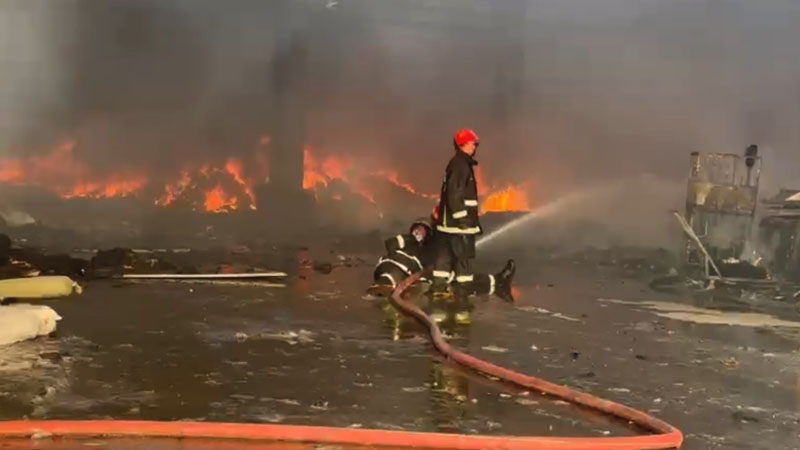
The blaze, which tore through the cargo complex at Hazrat Shahjalal International Airport, destroyed massive volumes of imported and export-ready goods awaiting clearance and shipment. In the aftermath, importers are discovering that the insurance protection they relied upon may not extend beyond the aircraft’s unloading point, leaving goods stored within airport premises completely unprotected.
The ‘Air Risk Only’ clause limits coverage to the time between loading onto and unloading from the aircraft. Once the goods are offloaded, insurance protection ceases, even if the items remain in transit or storage under customs supervision. This narrow coverage has left traders uncertain about whether their losses qualify for compensation following the fire.
According to the importers, they were not aware of the limitations. Many had secured insurance coverage through intermediaries, often under the guidance of banks that necessary proof of insurance for Letters of Credit. They now realise that the policies purchased were minimal and did not cover losses occurring after unloading. For some, this misunderstanding could mean the total loss of goods they had imported at considerable cost.
Freight forwarding agents and insurance executives confirm that ‘Air Risk Only’ coverage is a common choice among importers seeking to reduce expenses. They acknowledge that the policy’s lower premium makes it attractive, but its protection is extremely limited. For importers, the trade-off between cost and coverage has become painfully clear in the wake of the airport fire.
Insurers admit that the trend of choosing such thin coverage has grown due to price sensitivity in the market. According to one leading insurer, most importers prefer cheaper policies without realising the extent of the exclusions. In contrast, comprehensive ‘Air All Risk’ policies, though costlier, offer full protection from warehouse to warehouse, covering storage, transit and potential handling damages.
Insurance specialists have raised serious concerns about the continued use of the “Air Risk Only” clause in Bangladesh, calling it a local adaptation inconsistent with international norms. Globally, cargo insurance typically follows the Institute Cargo Clauses (Air), which extend coverage from the consignor’s warehouse to the consignee’s warehouse. Experts argue that the local version’s narrow interpretation leaves importers exposed to financial disasters, as seen after the Dhaka airport incident.
Bank officials have also acknowledged inconsistency between LC requirements and the policies issued. While LCs is supposed to ensure coverage throughout the shipment’s journey, banks often fail to verify whether the actual policy terms meet that requirement. As a result, importers mistakenly assume they are fully protected when, in reality, their coverage may have expired the moment their cargo touched the ground.
Officials from state-owned insurance entities indicated that, in some cases, coverage may be interpreted to extend until customs clearance, though this depends on policy wording and insurer discretion. However, such exception is rare and often inconsistent, adding to confusion and uncertainty among policyholders.
The consequence of this incident extends far beyond individual importers. Exporters have warned that disruptions in the cargo chain could lead to shipment delays, eroding international buyers’ confidence in Bangladesh’s reliability as a trading partner. Industry leaders argue that if compensation disputes persist, the economic aftershocks could ripple through the entire export sector, already under pressure from global market volatility.
Experts say the tragedy underscores a deeper issue: a lack of insurance literacy among traders and weak oversight by regulatory bodies. Many importers rely entirely on brokers or bank agents without understanding policy conditions, while insurers rarely ensure that clients are fully informed about exclusions. The Insurance Development and Regulatory Authority is now being urged to strengthen monitoring, mandate clearer policy disclosures, and enforce standard coverage definitions aligned with global practices.
The fire at Dhaka airport’s cargo village has become more than a tragic industrial accident; it has revealed structural flaws in the country’s trade insurance ecosystem. The event has exposed how minimal coverage, vague documentation and lax regulation may combine to make devastating financial consequence.
For many importers, the lesson has come at a painful cost. As investigations continue into the cause of the blaze, questions remain about answerability- not only for the fire itself but for the systemic gaps that left businesses unprotected. The incident serves as a stark reminder that in global trade, saving on premiums can sometimes cost far more than it saves, and that awareness, transparency and proper oversight are essential to safeguarding the country’s commercial backbone.

.jpg)