IDRA’s draft insurer resolution ordinance sparks mixed reaction

Abdur Rahman Abir: The Insurance Development and Regulatory Authority (IDRA) has finalised the draft insurer resolution ordinance 2025, a comprehensive proposal intended to stabilise the country’s troubled insurance industry. Although regulators highlight the initiative as a cornerstone of broader economic sector reform, the way and speed of its preparation have raised serious questions regarding its effectiveness and readiness for execution.
The draft ordinance has been modeled on the bank resolution framework and seeks to make a structured process for rescuing or restructuring failing insurance companies. IDRA says the initiative aims to safeguard policyholders, restore public trust in the sector, minimise the burden on creditors and hold responsible individuals responsible for mismanagement or financial mishandling. The proposal introduces provisions for a resolution fund, the formation of bridge insurers, the appointment of administrators, likely forced mergers, temporary public ownership and transfers of insurers to third parties.
Despite these ambitious goals, the preparation of the draft has drawn scrutiny due to the limited degree of stakeholders’ participation. Although the country has dozens of insurers, only a small fraction responded when IDRA solicited feedback. Most of those who did respond expressed broad approval, while only a few raised substantive concern. The Bangladesh Insurance Association (BIA), the industry’s key representative body, submitted minimal objections, noting only the need to clarify the restructuring pathway and to include industry representatives in the Crisis Management Council. When IDRA later convened a consultation meeting with several professional groups and associations, participants generally described the draft as well-constructed but also recommended refinement, including clearer guidance on merger mechanism and adjustment to specific clauses.
The urgency behind the ordinance stems from the severe distress gripping several insurance companies. Following the administrative upheaval in early 2024, IDRA’s new leadership publicly disclosed that a significant portion of the industry is economically fragile. Several life insurers, in particular, are burdened with enormous unpaid claims, persistent liquidity problems and allegations of widespread fund misappropriation. Some companies have failed to settle claims for years, while others have seen their economic foundation eroded by irresponsible investment, excessive operating costs, internal dysfunction and deliberate misuse of policyholders’ funds.
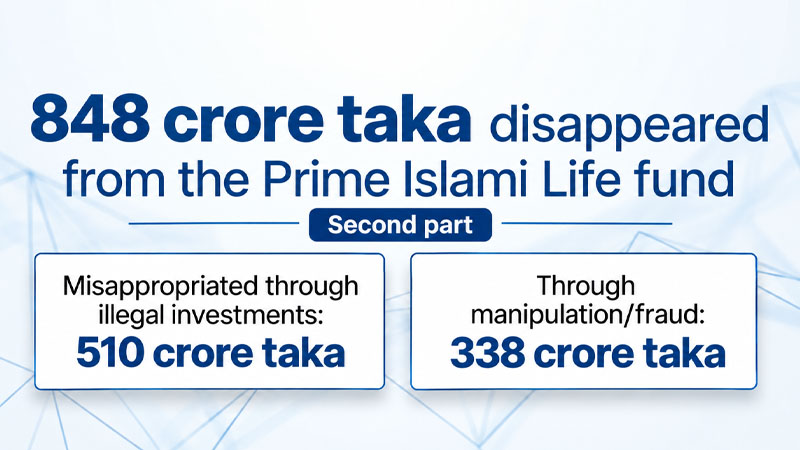
Recent regulatory reports highlight an enormous backlog of unpaid claims in the sector, dominated by a handful of companies with severe solvency issues. In one of the most alarming cases, former directors of a life insurer allegedly siphoned off a massive sum from the company’s fund. Other insurers have undergone ownership changes but have not yet regained economic stability. The cumulative effect of the failure has significantly undermined public confidence in insurance as a whole and has left thousands of policyholders at risk.
One of the most debated features of the draft ordinance is the proposed resolution fund, designed to support the restructuring of failing insurers. The fund is expected to rely on government financing, contribution from insurance companies, investment income and likely financial support from global development partners. However, international lending institutions do not typically provide economic assistance for recapitalising private companies that collapse due to corruption or mismanagement. Their support is usually limited to sector-wide development initiatives, like digital infrastructure upgrades, capacity building and institutional reform, as seen in previous World Bank–supported projects. This raises concern regarding whether the resolution fund may realistically be financed to the extent envisioned in the draft. Critics also warn that providing public money to rescue companies weakened by embezzlement could inadvertently shield or even embolden those responsible.
The ordinance also proposes the possibility of merging distressed insurers with healthier ones. Industry observers say that forcing solvent companies to absorb the liabilities made by misconduct in other firms could be both unjust and counterproductive. Bangladesh does have historical experience with large-scale consolidation; however, the mergers undertaken in the years immediately after independence were based on nationalisation, not on insolvency or fund theft, making the situation fundamentally different.
A notable gap in the draft is the absence of a clear definition of what constitutes harm to policyholders’ interest. Although the draft contains numerous definitions, it does not specify this core principle, mirroring an omission already present in the Insurance Act of 2010.
There is also significant overlap between the proposed ordinance and existing legislation. Many of the mechanisms highlighted in the draft- like recovering misappropriated funds, removing directors for harming policyholders, suspending or cancelling registration of non-compliant insurers and appointing administrators- already exist under the current Insurance Act. According to the analysts, the sector’s decline has resulted less from a lack of legal tools and more from years of inadequate enforcement.
As the government prepares to review the final draft, experts warn that the ordinance’s new power- especially those involving mergers, administrative takeovers, temporary state ownership and the formation of bridge insurers- could be vulnerable to misuse if strong safeguard is not established.
The proposed insurer resolution ordinance represents one of the most ambitious attempts in recent years to address deep structural failures in the country’s insurance sector. Yet concern remains about whether a framework developed with limited stakeholders’ involvement, reliant on uncertain funding sources and overlapping with existing law may deliver the reform the industry desperately needs. Many in the sector believe that the key to existent change lies not only in new legislation but in consistent, transparent and rigorous enforcement of the laws that already exist.
.jpg)