China vs India: Who has the Edge?
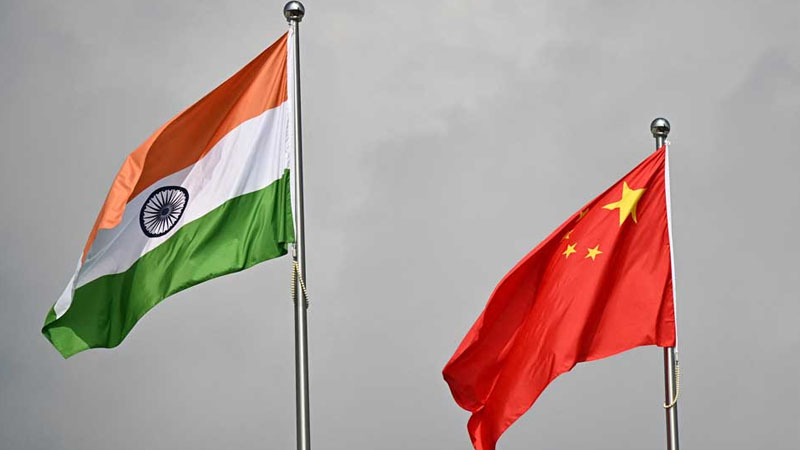
Int’l News Desk: India and China present insurers with two distinct long-term opportunities in Asia’s insurance landscape. One market is expanding much faster from a smaller base while the other remains vastly larger in absolute terms and is expected to keep that lead for years to come.
China’s insurance market generated about 851 billion dollars in premiums in 2025, making it the world’s second-largest. India ranked around tenth with roughly 151 billion dollars. That leaves China’s market nearly six times the size of India’s. Life insurance alone tells a similar story. China’s life gross written premiums exceeded 600 billion dollars in 2025, more than four times India’s total according to GlobalData figures cited in industry analysis.
Yet growth trajectories point in different directions. Swiss Re Institute forecasts India’s real insurance premium growth at an average 6.9 percent a year from 2026 to 2030, the fastest among major markets. China’s expected real growth rate over the same period is about 3.9 percent.
GlobalData projects China’s life insurance market will expand at more than 9 percent annually through 2030 while India’s life sector grows closer to 6 percent. Even with those rates, premiums per person are expected to remain far apart. GlobalData sees Chinese life premiums per capita exceeding 650 dollars by 2030 against roughly 90 dollars in India.
John Zhu, lead economist for the Asia-Pacific region at Swiss Re Institute, noted that India’s impressive growth rate must be viewed against the very different starting points of the two markets. Exchange rates, inflation, product mix and regulation all make simple catch-up calculations unreliable.
India still has substantial room to bring more people into formal insurance cover. Regulatory steps are helping. Individual life and health policies have been exempt from goods and services tax since September 2025.
The Bima Sugam digital marketplace is intended to improve access and transparency. Full foreign ownership is now permitted. Swiss Re expects these changes could lift India’s insurance penetration above 4 percent by 2036 from around 3.5 percent in 2025.
Challenges remain on the ground. Many Indian households lack the financial flexibility for long-term regular-premium products. Agent networks are stronger in cities while rural distribution stays uneven. Manogna Vangari of GlobalData has pointed out that reaching more households will require changes in product design and sales approaches outside major urban centres.
China’s advantages rest on higher household wealth, deeper savings and established demand for retirement, health, long-term care and wealth-management products. Profitability in either market ultimately depends on underwriting discipline, pricing, distribution economics, claims experience, capital management and investment performance rather than demographics alone.
Both markets face margin pressures. China has tightened agent qualification and commission rules while subsidised products and long-term care reserve requirements add costs. In India, rural distribution and small ticket sizes raise service expenses. The GST exemption, while helpful for consumers, can leave private insurers unable to recover input tax credits on commissions and other costs, potentially squeezing margins by as much as 400 basis points.
Globally the insurance industry is expected to slow, with Swiss Re projecting real premium growth of 1.3 percent in 2026 and 1.6 percent in 2027 after stronger recent years. Against that backdrop India stands out for its growth outlook while China retains the larger absolute pool of consumer demand.
Insurers must weigh the chance to acquire millions of new customers in India against the higher spending power already present in China’s more mature market. Neither path automatically delivers superior profits. Distribution costs, regulation, pricing and claims experience will decide returns over the long term.
.jpg)


.jpg)