US launches $20b maritime reinsurance programme for gulf shipping

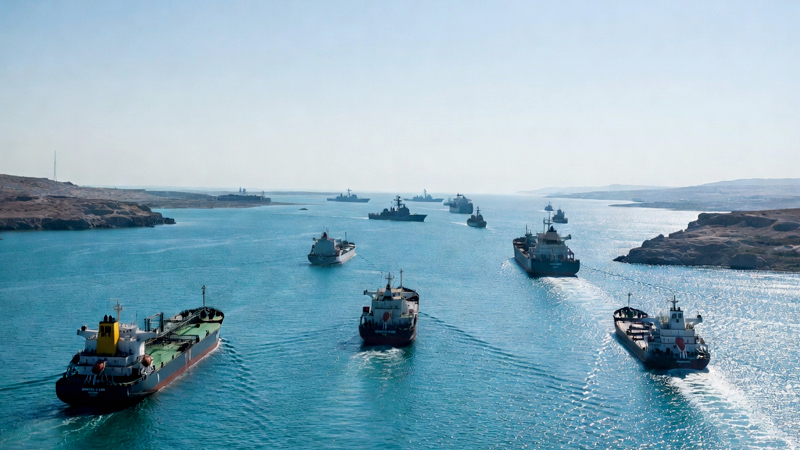
Desk report: The United States government has launched a $20 billion maritime reinsurance facility aimed at restoring commercial shipping through the Strait of Hormuz and the Persian Gulf, where vessel traffic has sharply declined amid escalating tensions between Iran and US-Israeli forces.
The programme, administered by the US International Development Finance Corporation (DFC) in coordination with the US Treasury Department and US Central Command (CENTCOM), will provide reinsurance coverage for maritime losses, including war-risk exposure, on a rolling basis.
The facility will initially support hull and machinery coverage as well as cargo insurance for shipments of oil, liquefied natural gas (LNG), gasoline, jet fuel and fertilizers, sectors considered critical to global energy and commodity markets.
The initiative follows a March 3 directive by President Donald Trump instructing the DFC to offer political risk insurance and financial guarantees after private insurers began withdrawing coverage or sharply increasing premiums for vessels operating in the Gulf region.
War-risk premiums for ships transiting the Strait of Hormuz have surged in recent days, rising from roughly 0.2% of hull value to as high as 1%, according to market estimates. The increase has added hundreds of thousands to millions of dollars per voyage, prompting many shipowners to avoid the region.
Several Protection and Indemnity (P&I) clubs have also issued notices cancelling or limiting war-risk coverage for vessels operating in the area following recent attacks on commercial shipping.
DFC Chief Executive Ben Black said the reinsurance programme is intended to restore confidence in global maritime trade during the conflict.
“Our goal is to help stabilise international commerce and support American and allied businesses operating in critical energy and commodity supply chains,” Black said in a statement.
Treasury Secretary Scott Bessent added that the government-backed facility provides a level of financial security that private insurers are currently unable to offer under the heightened geopolitical risk environment.
Black also noted that the initiative has been developed in close coordination with US Central Command, which is responsible for security operations in the region.
The move comes after a series of attacks disrupted tanker traffic through the Strait of Hormuz, one of the world’s most important energy chokepoints. The waterway handles approximately 20% of global daily oil shipments, making any disruption a major concern for international energy markets.
Several commercial vessels have reportedly been damaged in recent incidents, leading insurers and shipowners to reassess exposure in the region.
Industry analysts say the federal intervention could help restore some shipping activity but question whether the $20 billion facility will be sufficient if the conflict escalates.
Potential losses from a major maritime incident could quickly exceed available capacity, they warn. Some analysts have suggested that a backstop similar to the US Terrorism Risk Insurance Act (TRIA), with higher private-sector deductibles and federal support for catastrophic losses, may ultimately be required.
Details on eligibility requirements for vessels and operators under the programme have not yet been fully disclosed.
US officials said implementation of the facility is already underway, expressing confidence that the programme will help reopen critical maritime trade routes and maintain the stability of global energy supply chains.
The initiative represents a rare and significant federal intervention in the marine insurance market, reflecting the growing impact of geopolitical conflict on global shipping and insurance capacity.