Los Angeles wildfires set record as most expensive fire insurance claim in history
Int’l desk: The Los Angeles wildfires, particularly the Palisades and Eaton Fires, have become the most costly fire insurance event ever recorded, with insured losses estimated between $28 billion and $45 billion. Industry analysts predict the final tally could exceed $40 billion, surpassing the previous record-holder, the 2018 Camp Fire, which caused insured losses of approximately $12–12.5 billion.
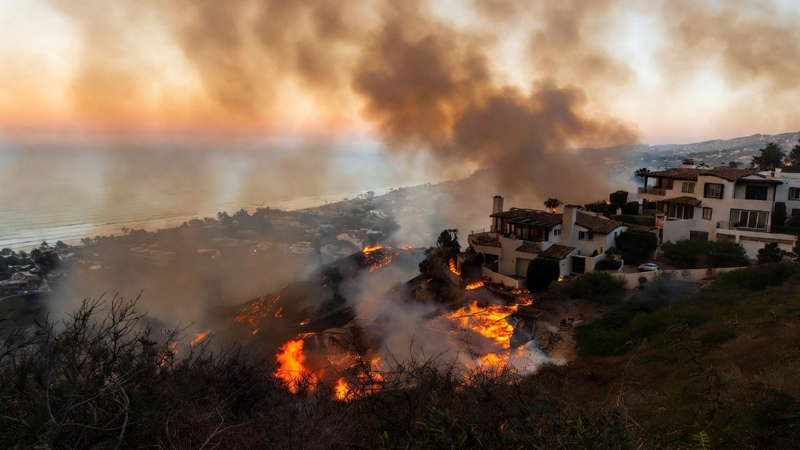
These wildfires, ignited in early 2025, were fueled by extreme Santa Ana winds, dry conditions and poor political management of crisis funds. The fires quickly ravaged thousands of acres across Los Angeles. The Palisades Fire decimated affluent neighborhoods in Pacific Palisades, destroying hundreds of luxury homes, while the Eaton Fire tore through parts of Altadena and surrounding communities. Combined, the fires have destroyed or damaged over 10,000 structures, including residential properties, businesses and critical infrastructure.
Insurance experts attribute the colossal claims to the high value of properties in the affected areas, widespread underinsurance and complications in reinsurance markets. The fires disproportionately affected high-net-worth individuals in upscale neighborhoods, where property values were significant but insurance coverage was often inadequate.
Major insurers, including State Farm, Allstate and Farmers, have already started processing tens of thousands of claims. However, some policyholders are facing delays due to the complex nature of the claims and complications arising from the state’s response to the fires. This situation has underscored the challenges insurance companies face in responding to large-scale disasters of this magnitude.
California's state officials declared a state of emergency and federal aid was mobilised to assist victims. President Trump authorised emergency relief efforts, directing FEMA resources to aid in recovery. However, there has been significant criticism regarding the local government's handling of the disaster response. Concerns have been raised over the mismanagement of state funds and the delayed emergency response, which some argue worsened the impact of the fires.
These political and logistical issues have raised questions about the adequacy of California’s disaster response infrastructure and its impact on the insurance industry. Experts suggest that such delays and inefficiencies have compounded the financial strain on insurance providers, possibly leading to increased premiums for policyholders in wildfire-prone regions.
The record-setting losses from the 2025 wildfires are expected to reverberate through global reinsurance markets. Analysts predict that significant payouts from reinsurers could lead to higher premiums for homeowners and businesses in wildfire-prone regions. As global insurers brace for the financial impact, there is growing concern that the increasing frequency and severity of climate-related disasters will create long-term challenges for the industry.
The catastrophic nature of these fires highlights the growing financial risks posed by climate change, especially in wildfire-prone regions. Experts urge policymakers, insurance companies and the public to prioritise climate adaptation measures. These could include stricter building codes, better land-use planning and improved forest management strategies to reduce the risk of such devastating fires.
The massive financial losses incurred by insurers have sparked renewed calls for reform in both the insurance industry and climate-related policies. Insurance industry leaders are advocating for more comprehensive solutions to address the growing risks of climate-amplified disasters. This includes lobbying for legislative changes aimed at improving the affordability and availability of coverage, particularly in high-risk areas like California.
Additionally, experts are calling for stronger collaboration between government agencies, insurance providers and environmental organisations to mitigate the risks of future wildfires. Effective forest management, improved infrastructure resilience and better wildfire prevention strategies are seen as essential components of a comprehensive approach to reducing the impact of such disasters.
The Los Angeles wildfires serve as a stark reminder of the growing risks associated with climate change and the evolving challenges faced by the insurance industry. As the financial burden of these unprecedented losses continues to mount, the need for comprehensive policy reforms and proactive measures to manage future risks has never been more urgent.
For insurance companies, these wildfires highlight the importance of adjusting underwriting practices and preparing for an increasingly volatile risk landscape. For homeowners, businesses and policymakers, the event serves as a call to action to better understand the risks and take steps to ensure that communities are better prepared for future disasters.