
Bangladesh’s Waterway Safety Crisis Highlights Need for Passenger Insurance
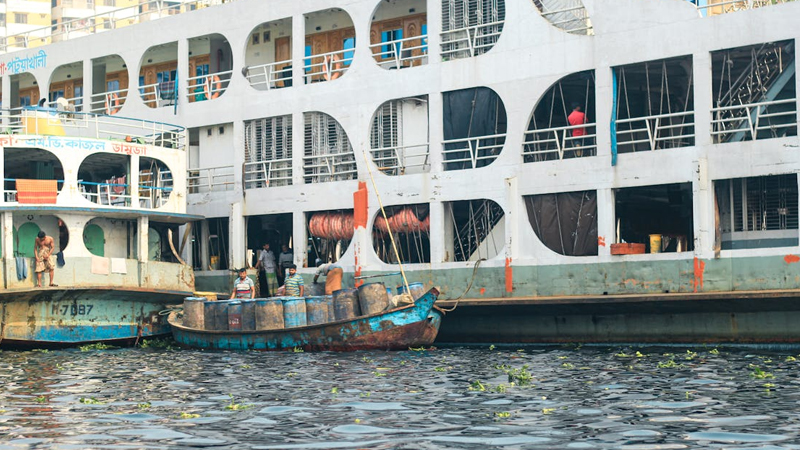
Staff Correspondent: Bangladesh is a riverine nation where waterways play a crucial role in transportation, trade, and economic activity. With an extensive network of rivers, canals, and inland routes, millions of people rely on water transport every year for travel and business. According to the World Bank, Bangladesh has approximately 24,000 kilometers of rivers, canals, and waterways. During the monsoon season, nearly 6,000 kilometers remain navigable, while the figure drops to around 3,900 kilometers during the dry season.
These waterways serve as a lifeline for passenger and cargo movement across the country. However, they have also become the scene of recurring tragedies. Every year, launch sinkings, trawler capsizes, vessel collisions, and other marine accidents claim lives, destroy property, and leave families facing severe financial hardship. The situation is further aggravated by the fact that most passengers and a large portion of cargo transported through inland waterways remain outside formal insurance protection.
Rising Accidents and Loss of Life
According to the annual report of the Bangladesh Jatri Kalyan Samity, at least 127 waterway accidents were recorded across the country in 2025. These incidents resulted in 158 deaths, 139 injuries, and 38 people reported missing.
The accidents included launch sinkings, trawler capsizes, cargo vessel collisions, overloading-related incidents, and accidents caused by adverse weather conditions. Although inland water transport remains one of the most affordable and accessible modes of travel, safety concerns continue to pose a significant challenge.
Data from the Naval Police Headquarters further illustrate the seriousness of the situation. In 2025, law enforcement agencies recovered 541 bodies from rivers and water bodies across Bangladesh. While not all of these deaths were directly linked to marine accidents, the figures highlight broader concerns about safety and security on the country’s waterways.
Research on major inland waterway accidents has identified several recurring causes, including human error, vessel collisions, overloading, poor vessel stability, adverse weather conditions, navigational difficulties, and inadequate safety measures. Studies analyzing large passenger vessel accidents have found that human error remains the single largest contributing factor.
Safety Concerns Continue in 2026
The trend has continued into 2026.
On March 18, a tragic accident occurred near the Sadarghat launch terminal in Dhaka when a small boat was crushed during a collision involving two launches. The incident left one person dead, several injured, and others missing.
Authorities formed investigation committees and initiated administrative action following the accident. However, the incident once again exposed a major weakness in Bangladesh’s inland water transport system: the lack of effective passenger insurance protection.
Although victims’ families were promised financial assistance, there was no mandatory passenger insurance mechanism capable of providing immediate and structured compensation. As a result, affected families remained dependent on government relief and lengthy administrative procedures.
Economic Losses Extend Beyond Human Casualties
The impact of waterway accidents goes far beyond the loss of human lives.
Bangladesh’s inland waterways transport approximately 194 million tonnes of cargo every year, according to World Bank estimates. Agricultural products, fish, consumer goods, construction materials, industrial raw materials, and various commercial commodities move through rivers and inland channels daily.
When launches, cargo vessels, or trawlers sink or collide, the resulting losses can be substantial. Businesses often lose valuable cargo, while vessel owners face repair or replacement costs. In many cases, the lost goods cannot be recovered.
Industry stakeholders say waterway accidents cause significant economic losses each year through cargo damage, vessel destruction, business interruption, and supply-chain disruptions. Yet a large share of these losses remains uninsured, forcing businesses and individuals to absorb the financial impact themselves.
Most Passengers Remain Outside Insurance Protection
Despite the importance of inland water transport, passenger insurance remains largely absent from the sector.
Most launch tickets sold in Bangladesh do not include automatic accident insurance coverage. Consequently, passengers who die or suffer injuries in accidents rarely receive structured compensation from insurance providers.
Instead, affected families often depend on government grants, charitable assistance, or limited compensation offered by vessel operators.
Insurance industry officials note that while some cargo shipments associated with bank financing or international trade are insured, the vast majority of domestic passengers and inland cargo movements remain outside formal insurance coverage.
This leaves millions of travelers exposed to significant financial risks every year.
Why Compensation Remains Limited
Experts point to several reasons behind the compensation gap.
First, passenger liability insurance has not been effectively implemented as a mandatory requirement for most inland passenger vessels.
Second, enforcement of regulations related to vessel fitness, registration, and insurance remains inconsistent.
Third, many small vessels and fishing boats continue to operate without proper registration, placing them outside formal regulatory and insurance frameworks.
Finally, Bangladesh lacks a coordinated and efficient marine insurance mechanism capable of delivering rapid compensation following accidents.
Together, these challenges have created a situation where victims often struggle to obtain meaningful financial support after disasters.
Low-Income Families Face the Greatest Risks
The financial consequences of waterway accidents are often most severe for low-income households.
Many victims are fishermen, farmers, laborers, small traders, and informal workers whose families depend on a single income source. When the primary breadwinner dies or becomes permanently disabled, the economic impact can be devastating.
Similarly, when a small business owner loses a cargo-laden boat or fishing vessel, years of savings and investment may disappear overnight.
Without insurance protection, these families frequently face long-term financial instability and poverty.
International Practices Offer Valuable Lessons
Many countries have introduced mandatory insurance systems to protect passengers traveling on inland waterways.
In countries such as India and Thailand, a small insurance premium is incorporated into passenger ticket prices. This enables passengers or their families to receive predetermined compensation through insurance providers if accidents occur.
International maritime regulations also recognize passenger liability insurance, third-party liability insurance, and cargo insurance as essential components of a safe and sustainable transport system.
These examples demonstrate that insurance can serve as an effective financial safety net while supporting broader transportation safety objectives.
A Huge Untapped Market for Bangladesh’s Insurance Industry
Industry experts believe Bangladesh’s inland water transport sector represents one of the largest untapped opportunities for the country’s insurance industry.
Every year, millions of passengers travel by launch, ferry, speedboat, and other inland vessels. At the same time, nearly 194 million tonnes of cargo move through the country’s waterways.
Yet only a small fraction of these passengers and cargo movements are protected by insurance.
At present, marine insurance in Bangladesh is largely concentrated on import-export cargo, vessel hull coverage, and commercial shipping risks. Domestic passengers, small traders, fishing vessels, and inland cargo operators remain significantly underinsured.
Insurance professionals argue that even a modest passenger insurance premium incorporated into launch tickets could create a sustainable compensation mechanism while generating a new source of premium income for insurers.
For example, adding only one or two taka to each passenger ticket could help establish a nationwide accident compensation fund capable of supporting victims and their families following major accidents.
The opportunity extends beyond passenger insurance. Specialized products covering inland cargo, fishing vessels, trawlers, river transport operators, and small logistics businesses could significantly expand insurance penetration while improving financial resilience across the transport sector.
For Bangladesh’s insurance industry, inland waterways represent a rare opportunity where commercial growth and social protection can advance simultaneously.
What Needs to Be Done
Experts recommend several immediate policy measures.
These include making passenger insurance mandatory for route permit and fitness certificate renewals, introducing micro-insurance coverage through passenger ticketing systems, expanding digital ticketing and passenger registration, and strengthening coordination among transport authorities and insurance regulators.
They also stress the importance of stronger enforcement against unregistered and unfit vessels, improved training for operators and crews, and the creation of a fast and transparent claims settlement mechanism for accident victims.
From Tragedy Response to Risk Protection
Bangladesh’s waterways remain indispensable to the country’s economy and daily life. Yet every journey continues to carry significant financial risk for passengers, families, and businesses.
The 127 waterway accidents recorded in 2025 and the deadly Sadarghat accident in 2026 demonstrate that investigation committees and temporary relief payments alone cannot solve the problem.
As Bangladesh continues to modernize its transport infrastructure, insurance protection must become an integral part of waterway safety policy. A comprehensive passenger insurance framework, stronger enforcement of regulations, and wider adoption of inland marine insurance could help ensure that accidents no longer leave families financially devastated.
For millions of Bangladeshis who depend on rivers every day, insurance is not simply a financial product. It is a critical layer of protection that can help transform tragedy into recovery and strengthen the long-term resilience of the country’s inland water transport system.




.jpeg)