The suspicious origins of the insurance of world trade centre
Mashrukh Khan: On July 24, 2001, real estate developer Larry Silverstein and his partners signed a 99-year lease for the World Trade Center complex from the Port Authority of New York and New Jersey. The deal, valued at approximately $3.2 billion, covered Towers 1 and 2; the iconic Twin Towers as well as Buildings 4 and 5 and associated retail and subgrade spaces. As part of the lease obligations, Silverstein Properties was required to secure substantial insurance coverage for the properties, a standard condition demanded by lenders and the lessor.
Silverstein, working through insurance broker Willis Group Holdings, assembled a complex multi-layered property insurance program from more than 20 insurers and reinsurers. The total coverage placed amounted to roughly $3.55 billion per occurrence, making it one of the largest commercial property insurance placements of its time. Because the lease had only recently been executed, formal policies had not yet been issued for most participants by September 11. Instead, the coverage was bound through a series of insurance binders and slips, which later became central to the ensuing legal disputes.
The program included a primary layer of about $10 million above a small retention, with multiple excess layers stacking up to the full $3.55 billion limit. Participants were drawn from both domestic and international markets. Swiss Re, through its unit SR International Business Insurance Co., emerged as the largest single participant, underwriting approximately 22 percent of the program, or around $742 million to $877 million depending on the layer calculations.
Other major or notable insurers included Travelers Property Casualty Corp., which provided the primary layer alongside partners such as Lexington Insurance (an AIG unit), Liberty Mutual, Allianz, Royal Indemnity, and Houston Casualty. Additional carriers filled the excess layers, creating a syndicated placement typical for high-value risks that no single insurer could underwrite alone.
At the time, the policies were written on an “all-risk” basis, which automatically encompassed terrorism as a covered peril; terrorism exclusions had not yet become standard in the U.S. commercial property market prior to the attacks. Silverstein reportedly insisted on insuring the properties for the full replacement value demanded by lenders, even though some assessments placed a lower valuation on the aging towers, which contained significant asbestos remediation challenges and were not fully occupied.
The premium paid for this coverage has been described in various accounts as substantial, though exact figures for the entire program are not uniformly detailed in public records. Industry observers noted that the cost reflected the massive limits and the unique nature of the risk, with Silverstein’s team negotiating hard to secure the broadest possible terms.
The placement occurred just weeks before the attacks, a timing that later fueled public speculation and conspiracy theories, though contemporaneous reporting emphasized that the insurance was a contractual necessity tied directly to the lease signing and financing requirements.
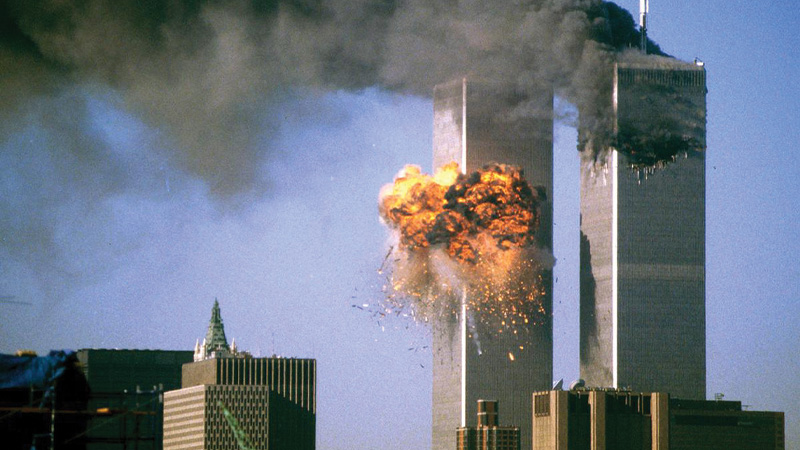
When American Airlines Flight 11 struck the North Tower at 8:46 a.m. on September 11, 2001, followed 17 minutes later by United Airlines Flight 175 hitting the South Tower, the destruction triggered one of the most complex insurance claims in history.
Silverstein promptly filed claims, asserting that the two separate plane impacts constituted two distinct “occurrences” under the policy terms. This interpretation, if accepted, would have entitled the leaseholders to double the limit—up to approximately $7.1 billion. Insurers, led by Swiss Re, countered that the coordinated terrorist attack represented a single occurrence, capping their collective liability at $3.55 billion.
The absence of fully issued policies complicated matters. Different binders referenced varying forms: some, including Swiss Re’s, relied on the WilProp 2000 form that explicitly defined “occurrence” in a manner favoring a single-event interpretation. Others were argued to follow a Travelers form that lacked such a clear definition, potentially allowing New York’s “unfortunate event” test or broader construction to treat the towers’ losses separately. The dispute escalated into federal court in the Southern District of New York, resulting in multiple trials, appeals, and partial summary judgments.
In the first phase, a jury determined that certain insurers, including Swiss Re and others bound on the WilProp form, were liable for only one occurrence. A subsequent trial involving nine other insurers resulted in a verdict that those carriers’ coverage was governed by terms allowing for two occurrences, effectively doubling their portion (approximately $2.2 billion for their share).
After further litigation, appeals, and negotiations, some facilitated by New York state officials including then-Attorney General Eliot Spitzer and Insurance Superintendent Eric Dinallo, the parties reached a global settlement in 2007. Insurers ultimately paid Silverstein Properties $4.55 billion, a figure that exceeded the single-occurrence limit by about $1 billion but fell well short of the $7.1 billion originally sought.
This payout covered property damage to the destroyed and heavily damaged buildings, as well as elements of business interruption, though separate claims and subrogation issues extended the resolution timeline. The broader 9/11 insurance losses across all lines; property, business interruption, liability, life, and aviation totaled an estimated $32 billion to $40 billion in 2001 dollars, marking the costliest insured event in history at the time until surpassed by Hurricane Katrina.
The WTC insurance saga carried profound implications for the industry. It highlighted the ambiguities inherent in binder-based placements and the challenges of defining “occurrence” in coordinated catastrophic events. In response, insurers rapidly introduced terrorism exclusions in commercial policies, prompting the U.S. government to enact the Terrorism Risk Insurance Act (TRIA) in 2002 to provide a federal backstop and stabilize the market. The case also underscored the critical role of reinsurance in absorbing mega-losses and the lengthy tail of litigation that often follows such disasters.

.jpg)