How Hurricane Katrina Continues to Reshape Insurance Risk
News desk: More than two decades after Hurricane Katrina devastated the US Gulf Coast, its impact continues to shape how insurers assess risk, price policies and respond to large-scale catastrophes. While subsequent disasters have rivaled its scale, Katrina remains one of the most consequential loss events in insurance history, both for its financial toll and its lasting influence on the global risk landscape.
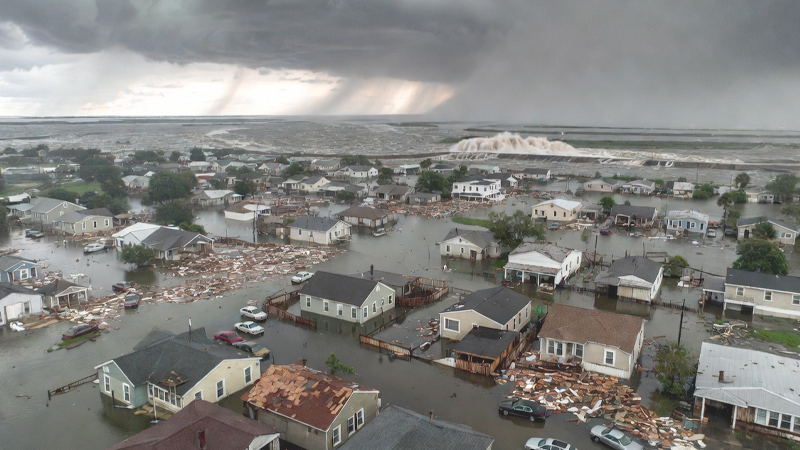
When Katrina made landfall in August 2005, it triggered widespread destruction across Louisiana, Mississippi, and Alabama. The failure of New Orleans’ levee system led to catastrophic flooding, submerging entire neighborhoods and displacing hundreds of thousands of residents.
Nearly 1,800 people lost their lives, while total economic losses exceeded $125 billion. Insured losses were estimated at approximately $40–50 billion, according to the Insurance Information Institute. Insurers processed more than 1.7 million claims spanning homes, businesses and vehicles, making it one of the largest claims events ever recorded.
Although later disasters such as Hurricane Harvey and Hurricane Ian have produced comparable or even higher losses in nominal or inflation-adjusted terms, Katrina set a defining benchmark for the scale and complexity of insured catastrophe risk.
The aftermath exposed critical fault lines in insurance coverage, most notably the distinction between wind and flood damage. While standard homeowners’ policies typically covered wind-related losses, flood damage was excluded and instead covered by the federally backed National Flood Insurance Programme (NFIP).
In New Orleans, where flooding caused the majority of destruction, this separation led to widespread disputes. Policyholders and insurers clashed over whether damage resulted primarily from wind or water, resulting in prolonged litigation and delayed settlements. Compounding the issue, claims adjusters faced severe logistical challenges as damaged infrastructure, restricted access and disrupted communications slowed assessments and payouts, placing additional strain on both insurers and policyholders.
The financial shock extended far beyond the United States. Major reinsurers, including Munich Re, Swiss Re and the Lloyd’s of London market, absorbed significant portions of the losses. The event underscored the interconnected nature of global risk transfer. While large reinsurers remained resilient, several smaller insurers experienced severe capital strain, with some exiting high-risk markets or becoming insolvent.
Katrina prompted a fundamental reassessment of catastrophe risk. Insurers and reinsurers began integrating more advanced models that accounted for storm surge, levee failure and compound hazards. In the years that followed property insurance premiums in coastal regions rose sharply, underwriting standards tightened and wind and hail deductibles became more common. Many insurers also reduced exposure in high-risk areas.
Reinsurance markets hardened as well, reflecting a new reality in which billion-dollar disasters were becoming increasingly frequent. At the same time, catastrophe modeling evolved significantly, incorporating more detailed climate and flood-risk data to better estimate extreme event scenarios.
The disaster also highlighted a persistent ‘protection gap’, the difference between total economic losses and insured losses. Lower-income communities, where insurance penetration was often lower, faced slower and less complete recoveries. The NFIP itself came under intense scrutiny after accumulating substantial debt, prompting ongoing reforms and periodic reauthorisation debates in Congress.
At the policy level, building codes were strengthened and resilience measures became a greater priority, particularly in hurricane-prone regions. Recovery across the Gulf Coast, however, remained uneven. Some neighborhoods in New Orleans rebuilt with improved infrastructure and elevated homes, while others struggled with long-term population loss and economic decline.
Business interruption claims added further complexity, as companies sought compensation for prolonged closures. The energy sector, particularly offshore oil and gas operations, also generated significant claims, amplifying overall losses.
Katrina’s legacy has become even more relevant as climate-related risks intensify. In recent years, global insured losses from natural disasters have frequently exceeded $100 billion annually, driven by stronger storms, wildfires and flooding events. In response, the insurance industry has expanded the use of parametric insurance products, increased reliance on climate data in underwriting and introduced incentives for policyholders to invest in resilience and mitigation.
Yet challenges remain. Rising sea levels, aging infrastructure and continued development in vulnerable regions continue to increase exposure to catastrophic losses. For insurers, reinsurers and policymakers, Katrina remains a defining case study in how extreme events reshape risk models, insurance structures and public-private responses to disaster.
For individuals and businesses, the lesson remains clear: comprehensive coverage, including separate flood insurance where necessary, combined with proactive risk mitigation, is essential in an era of increasingly severe natural disasters.

.jpg)