Air India Crash Triggers One of India’s Largest Claims
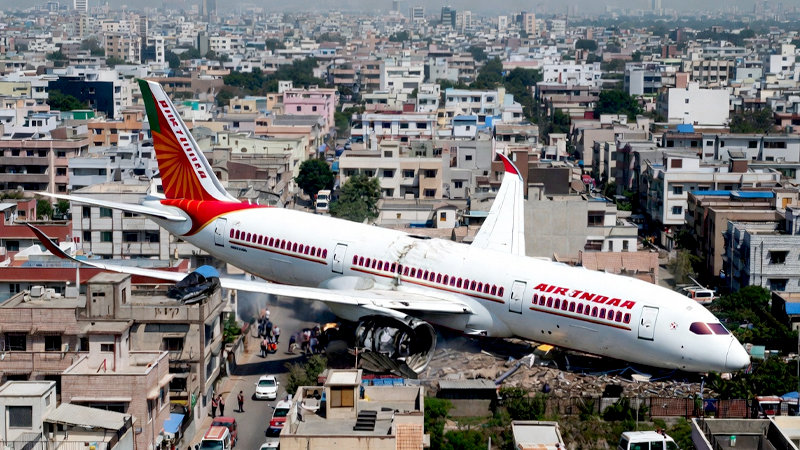
Int’l Desk: The crash of Air India Flight AI 171 in Ahmedabad on June 12, 2025, is expected to generate insurance claims of approximately $475 million, potentially making it one of the largest aviation insurance losses in India’s history.
The Boeing 787-8 Dreamliner, operating a scheduled flight from Ahmedabad to London Gatwick, crashed shortly after takeoff into a densely populated area. The accident claimed 241 lives, including passengers, crew members and individuals on the ground, while dozens were reportedly injured. One passenger survived the crash.
According to industry estimates, the total loss are expected to comprise both hull and liability claims. The destruction of the aircraft and its engines is estimated to account for roughly $125 million. That portion of the claim has reportedly already been processed through a combination of Indian insurers and international reinsurers.
The larger component of the loss is expected to arise from liability claims related to passenger fatalities, crew compensation, third-party property damage and injuries sustained on the ground. Market estimates suggest these claims could reach as much as $350 million.
Air India’s aviation insurance programme, renewed earlier in 2025, was led domestically by Tata AIG General Insurance and included significant international reinsurance participation. Industry sources indicate that approximately 95% of the airline’s aviation risk exposure had been ceded to global reinsurers, including firms such as AIG, AXA and Allianz.
The aircraft involved in the accident had reportedly received increased insurance coverage following a recent engine replacement, with coverage on the aircraft understood to have risen to approximately $101 million.
In the weeks following the disaster, Air India and parent company Tata Group announced interim compensation measures for affected families. Initial payments of around $30,000 were reportedly distributed to the families of deceased passengers and affected ground victims. Tata Group also pledged ex-gratia compensation of around $119,000 for each deceased victim, in addition to medical assistance, welfare support and the establishment of a memorial trust.
These voluntary payments are separate from formal insurance liabilities governed partly by the Montreal Convention, which establishes baseline compensation standards for international air travel accidents. Final compensation amounts may ultimately depend on negotiated settlements or litigation outcomes.
Reports indicate that Air India has begun offering full and final settlement packages to some families, in certain cases contingent upon discharge agreements limiting future legal claims against the airline and other parties. Legal advisors have reportedly urged affected families to review such agreements carefully before acceptance.
Meanwhile, Life Insurance Corporation of India and other insurers have eased documentation requirements to accelerate life insurance claim processing for affected policyholders.
Beyond its tragic human impact, the AI 171 disaster is expected to become a significant test for India’s aviation insurance and reinsurance framework. Industry observers say the scale of the loss underscores the importance of global risk-sharing arrangements in managing catastrophic aviation events.
Investigations into the cause of the crash remain ongoing, with findings expected to influence future aviation safety protocols, underwriting practices and insurance pricing across the sector.
.jpg)