Policy support and low yields drive shift toward higher-return assets
Chinese Insurers Ready to Inject Up to 1 Trillion Yuan into Equities
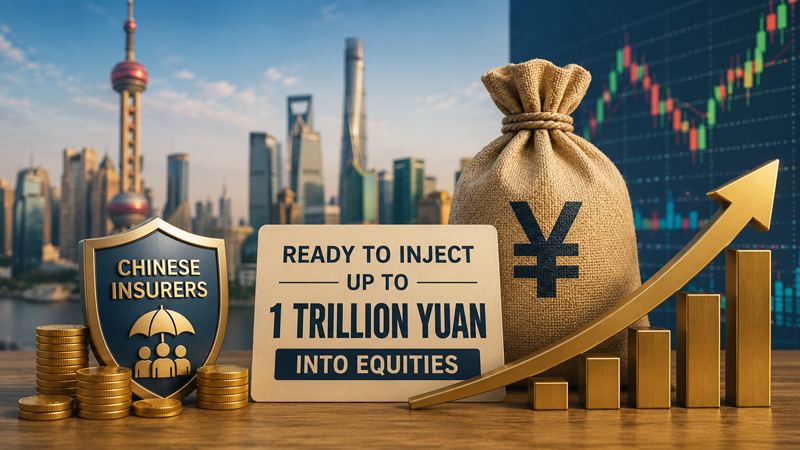
International Desk: Chinese insurance companies are expected to channel approximately 1 trillion yuan (about $145 billion) into public equities this year, according to analysts. This projection builds on a sharp rise in allocations that has already lifted stock and securities investment fund holdings to 5.7 trillion yuan, or roughly 15.4% of total investment assets.
The anticipated inflow reflects ongoing regulatory efforts to direct long-term capital from the insurance sector into domestic stock markets. These measures form part of broader initiatives to expand direct financing, support economic stability and mitigate the impact of a prolonged low-interest-rate environment.
By the end of 2025, the industry’s total funds in use had grown to 38.48 trillion yuan, with equity assets showing particularly strong momentum following a 1.6 trillion yuan increase in stocks and funds during the year.
The shift has been driven by a combination of policy direction and commercial incentives. In early 2025, authorities encouraged major state-owned insurers to allocate 30% of newly added premiums into yuan-denominated equities. This directive, alongside adjustments to investment limits and capital requirements, prompted rapid portfolio rebalancing across the sector.
Major insurers including China Life, Ping An Insurance, and New China Life Insurance have reported meaningful increases in equity exposure, contributing to improved investment returns amid a recovering stock market.
Analysts from Hua Chuang Securities and CSC Financial have outlined a range of scenarios for 2026 inflows. Estimates vary from approximately 968 billion yuan under conservative assumptions to more than 1.18 trillion yuan in optimistic cases, with a base-case projection centering on the 1 trillion yuan mark.
Survey data from the Insurance Asset Management Association of China supports this outlook. Nearly two-thirds of insurers and asset managers indicated plans to moderately increase equity allocations, with many targeting portfolio increases of up to 10%.
Several structural factors are shaping insurers’ investment strategies. Persistently low yields on fixed-income assets have compressed spreads, pushing institutions toward investments offering higher potential returns and stable dividend income. Given their long-term liabilities, insurers are well positioned to act as “patient capital,” favoring sectors such as banking, utilities and state-owned enterprises with strong and predictable cash flows.
Policy alignment remains a key driver. The government’s focus on the “five articles” of finance, including technology, green development and inclusive finance, has further encouraged insurers to allocate capital toward strategic industries. At the same time, some firms have increased exposure to Hong Kong-listed equities, particularly H shares of banks and other high-quality companies offering attractive valuations.
Higher equity exposure has already delivered tangible benefits. Eight major Chinese insurers reported a combined 26.6% increase in net profits in 2025, supported in part by unrealised gains and stronger investment income from equities. Companies such as Ping An have highlighted a balanced strategy combining high-dividend value stocks with growth-oriented investments linked to emerging economic sectors.
From a capital markets perspective, sustained inflows from insurers are widely viewed as a stabilising force. As long-term investors less prone to short-term trading, insurance companies can help reduce market volatility while supporting the development of deeper and more resilient equity markets. This aligns with national objectives to reduce reliance on bank-based financing and strengthen the role of capital markets in economic growth.
China’s insurance sector has continued to expand steadily into 2026. In the first quarter alone, premium income reached 2.31 trillion yuan, marking a 6.2% year-on-year increase, with life insurance leading overall growth.
As the year progresses, market participants will closely monitor allocation trends, stake-building activity and investment performance across the sector. The scale and pace of insurance capital flows into equities will be a key indicator of how effectively the industry can balance its double role, delivering stable returns for policyholders while supporting China’s long-term financial and economic objectives.

.jpg)