Export Credit Insurance Drop Threatens Bangladesh’s Garment Sector Growth
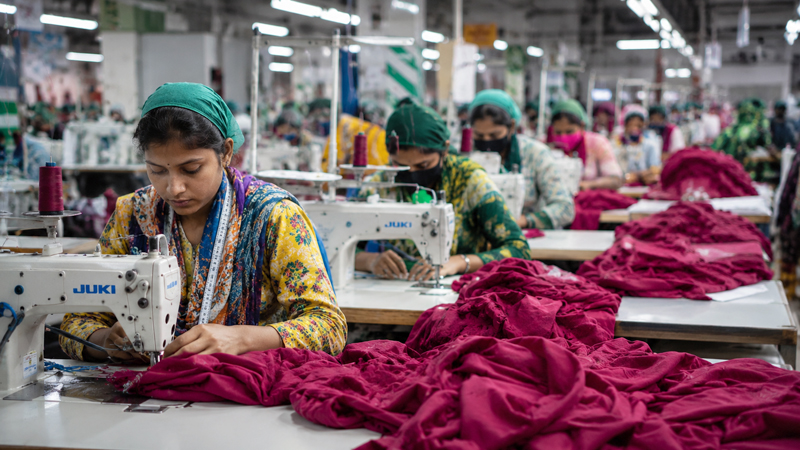
Staff Correspondent: Bangladesh’s ready-made garment (RMG) sector, the country’s largest source of foreign exchange earnings, is facing mounting pressure from a combination of global economic challenges and domestic constraints. A sharp decline in export credit guarantee insurance is adding a new layer of risk for exporters and the broader financial system.
Export Slowdown Signals Growing Stress
According to data from the Export Promotion Bureau (EPB) and Bangladesh Bank, garment export earnings declined by 2.82% to $31.72 billion during the first 10 months of the 2025–26 fiscal year, covering July 2025 to April 2026.
This slowdown reflects weakening global demand and rising trade risks, prompting international credit rating agencies and insurers to scale back guarantee coverage for exporters.
Why Credit Insurance Matters
Export credit guarantee insurance plays a critical role in international trade. It protects exporters against losses if foreign buyers fail to make payments due to insolvency or financial distress.
Its availability also enables banks to extend pre-shipment financing and facilitate back-to-back letters of credit under more favorable conditions, supporting exporters in accessing new and emerging markets.
Global Pressures Weigh on Demand
Global economic conditions are significantly undermining this protection mechanism. Persistent inflation in key markets such as Europe and the United States has weakened consumer purchasing power, leading to reduced demand for apparel products.
At the same time, financial instability among international buyers and retailers has increased the risk of payment defaults. In response, insurers are reducing exposure by lowering guarantee limits.
Domestic Constraints Deepen the Challenge
Local challenges are compounding the situation. Industry insiders say shortages of gas and electricity have reduced production capacity in the garment sector by 25% to 30%, disrupting timely delivery of export orders.
These operational disruptions are further increasing perceived risks among international insurers and buyers.
Direct Impact on Export Performance
The decline in credit guarantee coverage is already affecting export performance. During the same period, knitwear exports fell by 3.68% and woven garment exports declined by 1.83%.
Exports to the European Union, Bangladesh’s largest market, dropped by 4.38% to $15.54 billion.
In response to reduced insurance support, many exporters are increasingly relying on open account transactions, where goods are shipped without payment guarantees. This leaves them fully exposed to potential non-payment risks.
Setback for Market Diversification
Efforts to expand into non-traditional markets are also facing setbacks. Between July and February of the current fiscal year, exports to these markets declined by 6.34%.
Limited access to credit guarantees is discouraging businesses from entering higher-risk destinations, slowing diversification efforts.
Banking Sector Under Pressure
The impact is also spreading to the banking sector. Data from Bangladesh Bank shows that back-to-back import letters of credit decreased by 10.69% during July–January, indicating a contraction in trade financing activity.
Banking officials warn that nearly one-third of loans extended to the garment and textile sector are now at risk of becoming non-performing. Delayed export proceeds and reduced insurance coverage are also making banks more cautious in providing new working capital financing.
Policy Support Becomes Critical
Economists and industry experts emphasise the need for immediate and coordinated policy intervention. Suggested measures include introducing a state-backed reinsurance scheme to provide alternative credit guarantee support and ensuring uninterrupted supply of gas and electricity to stabilise production.
Additional support may be required to offset the gradual withdrawal of cash incentives ahead of Bangladesh’s graduation from Least Developed Country (LDC) status in 2026.
Need for Structural Transformation
In the longer term, the current challenges highlight the need for structural transformation within the sector. Experts recommend increasing production of man-made fibre-based garments, investing in technology-driven manufacturing, and improving logistics infrastructure, including ports and airports, to enhance global competitiveness.
A Broader Economic Warning
The decline in export credit guarantee insurance is not an isolated issue. It reflects broader economic vulnerabilities affecting Bangladesh’s export ecosystem.
Without timely policy support and strategic reforms, the country’s most critical export sector may face prolonged challenges in sustaining growth and maintaining its position in the global market.
.jpg)