Transit Insurance Reduces Risks in Qurbani Animal Transport
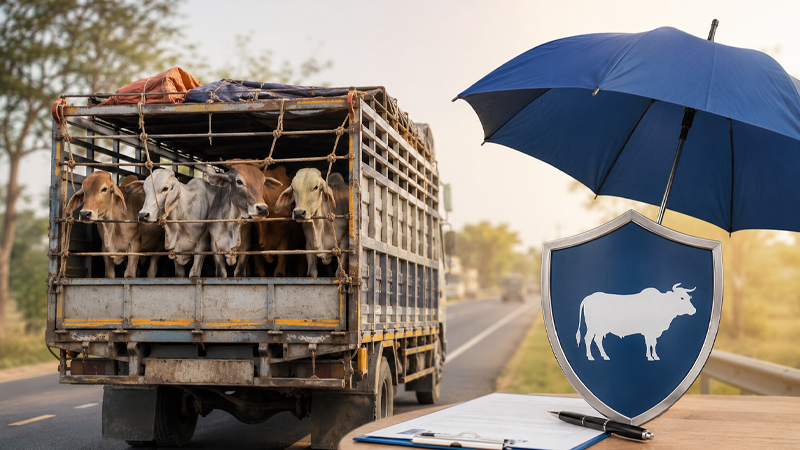
By Staff Correspondent: As Eid-ul-Azha approaches, Bangladesh’s livestock sector enters its busiest period, marked by the large-scale movement of sacrificial animals from rural farms to urban markets. While this seasonal activity reflects the strength of domestic livestock production, it also exposes farmers and traders to considerable financial risks during transportation. In this context, livestock transit insurance is gradually emerging as a practical and effective safeguard against potential losses.
According to official estimates, Bangladesh will have around 12.33 million sacrificial animals available in 2026, including cattle, buffalo, goats, and sheep. The projected demand stands at approximately 10.1 million, leaving a surplus of more than 2.2 million animals. A similar trend was observed in 2025, when about 9.13 million animals were sacrificed, with a significant number remaining unsold. Over time, this seasonal trade has evolved into a multi-billion taka economic sector, playing a crucial role in supporting rural livelihoods and contributing to the national economy.
A substantial portion of these animals is transported from regions such as Rangpur, Kushtia, Jashore, Rajshahi, and Jamalpur to major city markets, particularly Dhaka. However, the journey is often fraught with risks. Road accidents, overcrowded vehicles, prolonged traffic congestion, extreme heat, and even incidents of extortion along highways frequently result in losses. In many cases, a single accident can lead to the death or serious injury of multiple animals, causing significant financial damage to farmers and traders.
To address some of these challenges, Bangladesh Railway has introduced special cattle trains that allow livestock to be transported at relatively lower costs. Each wagon can carry around 16 cattle, helping to reduce per-animal transportation expenses. Despite this initiative, limited capacity means that the majority of animals are still transported by road, leaving most stakeholders exposed to ongoing risks.
Amid these challenges, livestock transit insurance is gaining increasing attention as a viable risk management tool. Several non-life insurance companies in Bangladesh now offer specialised policies designed to cover transport-related risks. These policies typically provide compensation for losses caused by road accidents, animals falling from vehicles, natural disasters such as storms, floods, and lightning, as well as fire incidents and bites from poisonous animals. In certain cases, losses resulting from heat stress are also covered. Moreover, if an animal must be slaughtered during transit based on a registered veterinarian’s recommendation, compensation may still be applicable under the terms of the policy.
Insurance providers are also incorporating technology to enhance monitoring and claims management. Tools such as GPS tracking, IoT devices, and biosensors are being used to monitor the location and health condition of animals in transit. This technological integration enables faster verification of incidents and contributes to quicker and more efficient claim settlements, making the system increasingly reliable for policyholders.
One of the key advantages of transit insurance is its affordability. Premium rates generally range between 2.75 percent and 5.5 percent of the animal’s value on an annual basis, while short-term seasonal policies are often available at even lower costs. Considering the high value of livestock and the scale of potential losses, many traders are beginning to view insurance as a practical and cost-effective investment rather than an optional expense.
The claims process has also become more streamlined in recent years. In the event of a loss, policyholders are required to notify the insurer promptly and submit relevant documents, including transport papers, purchase receipts, and visual evidence of the damage. In cases involving illness, a veterinary certificate is required, while accident-related claims may involve submitting a general diary report along with driver information. Many insurance companies now offer digital claim submission through mobile applications and online platforms, allowing valid claims to be processed and settled within a few working days.
At the same time, the government has taken steps to manage the seasonal livestock market more effectively. In 2026, authorities plan to establish 27 temporary cattle markets in Dhaka and a total of 3,678 markets across the country. Veterinary teams will be deployed to ensure animal health and safety, while online cattle trading platforms have been introduced without imposing additional fees or taxes, making transactions more accessible and efficient.
Despite these developments, awareness of livestock transit insurance remains limited, particularly among small-scale farmers and seasonal traders. Industry experts suggest that introducing instant insurance service booths at highways, cattle markets, and ferry terminals could significantly improve adoption rates and help reduce financial losses during the peak season.
As Bangladesh’s livestock sector continues to grow, it is increasingly being recognised as more than a seasonal or religious activity. It has become a vital economic pillar supporting millions of people. In this evolving landscape, transit insurance has the potential to play a transformative role by reducing uncertainty and strengthening financial resilience. With improved awareness, supportive policies, and wider adoption of technology, the sector can move towards a safer, more efficient, and more sustainable future.

.jpg)