Language Remains the Biggest Barrier to Insurance Protection for Hill Communities
By Staff Correspondent: Bangladesh’s insurance penetration remains among the lowest in the world, accounting for only around 0.33% to 0.5% of the country’s GDP. However, access to insurance services is even more limited in the three districts of the Chittagong Hill Tracts Rangamati, Khagrachhari and Bandarban. Industry observers say that language barriers, low awareness, weak field-level presence, and a lack of trust in the sector continue to keep many hill residents outside the insurance safety net.
Experts believe that language is one of the most significant obstacles to expanding insurance coverage in the region. Insurance policies often contain technical and institutional terms that are difficult for ordinary people to understand. Concepts such as surrender value, lapsed policy, and bonus surrender can be confusing even for many Bengali-speaking consumers.
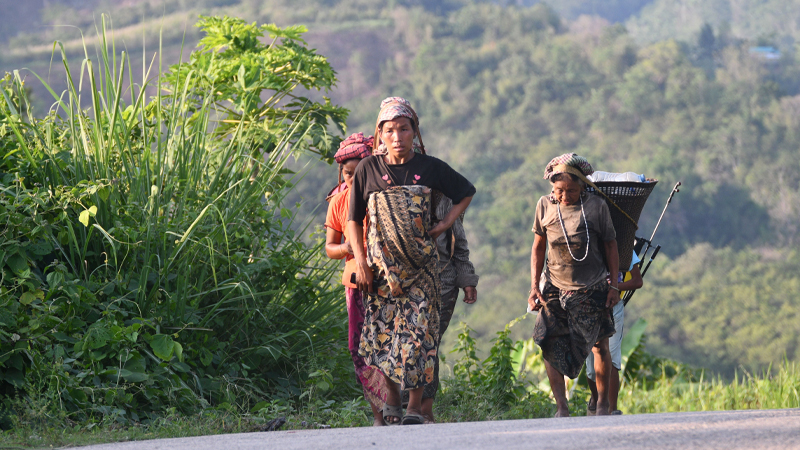
For indigenous communities such as the Chakma, Marma, Tripura, and Mro, the challenge is even greater because they use their own native languages in daily life. As a result, many potential customers struggle to understand insurance products and often lose interest before learning about their benefits.
Geographical challenges have also slowed the expansion of insurance services in the hill districts. Many villages are located in remote and difficult-to-reach areas, with long distances separating one community from another. This makes regular customer engagement costly and difficult for insurance companies.
Most field representatives are recruited from lowland regions and often have limited knowledge of local languages and cultural practices. Industry insiders say this communication gap makes it difficult to build strong relationships with local residents. High transportation costs and limited logistical support further complicate insurance operations in the region.
Stakeholders also point to a growing trust deficit as a major challenge. Concerns about claims settlement, which have existed across the broader insurance sector for years, have also affected public perception in the hill districts. Many people believe that receiving insurance benefits when needed is not always straightforward, even after paying premiums regularly.
National industry data reflects some of these concerns. According to the Insurance Development and Regulatory Authority (IDRA), insurance companies collected approximately Tk 4,600 crore in premiums between January and September 2025. During the same period, claims worth Tk 2,221 crore were paid, equivalent to about 48% of total premium income.
At the same time, outstanding claims across the industry reached Tk 9,624 crore. Data analysis shows that the sector’s average claims settlement rate during the nine-month period was only 23%. In life insurance, the settlement rate stood at 35.18%, while in non-life insurance it was just 7.55%.
Of the total Tk 4,600 crore in premium income, life insurers collected Tk 3,050 crore and paid Tk 2,106 crore in claims. Non-life insurers collected Tk 1,547 crore but settled only Tk 275 crore in claims. Industry observers say such figures contribute to negative public perceptions about insurance and discourage potential customers from purchasing coverage.
Residents in the hill districts have also reported difficulties during claims and maturity payments. According to stakeholders, insurance representatives often explain policy benefits in simple terms during sales discussions. However, when customers seek claim payments or maturity benefits, they frequently encounter extensive documentation requirements, conditions, and procedural complexities. Delays in claim settlement have also been a common complaint.
Insurance sector officials acknowledge that most brochures, leaflets, and promotional materials are currently produced only in Bengali. Dedicated information materials in Chakma, Marma, or other indigenous languages are generally unavailable. As a result, awareness campaigns often fail to reach their intended audiences effectively.
Language and anthropology experts say that insurance companies must give greater importance to local languages and cultural realities if they want to expand coverage in the Chittagong Hill Tracts. They recommend translating key policy terms, benefits, and conditions into local languages to improve understanding and accessibility.
They also suggest recruiting more local youth as field representatives. Such an approach could strengthen communication, improve trust, and help insurance companies better understand the needs of local communities.
Experts further emphasize the need for inclusive microinsurance products specifically designed for underserved regions such as the Chittagong Hill Tracts. They say insurance providers should introduce easy-to-understand information materials, conduct awareness campaigns in local languages, and invest in regular customer education programs.
According to them, such initiatives could gradually bring thousands of currently uninsured hill residents under financial protection while helping Bangladesh’s insurance sector become more inclusive and accessible for all communities.
.jpg)