Nepal Floods: Insurance Index Falls, Companies under Claim Pressure
Staff Correspondent: The impact of the floods in Nepal has also been felt in the country’s insurance sector. Following the floods, the share price index of insurance companies on the Nepal Stock Exchange has fallen by 3.90%. Investors are concerned about the financial pressure on insurance companies amid fears that they may have to pay large amounts of compensation for damaged assets.
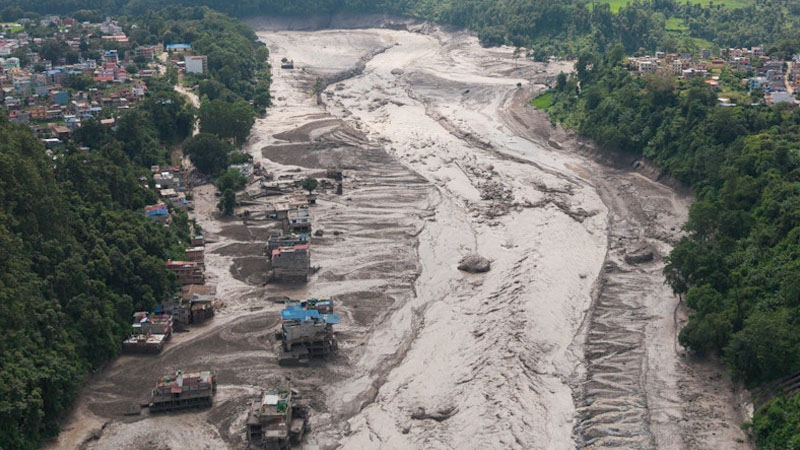
On Wednesday (26 August), sudden floods struck the hilly areas along the Nepal-China border. According to experts, part of a glacier collapsed, and ice, rocks and soil mixed with river water flowed downward, triggering flash floods. Border areas including Rasuwa and Nuwakot have been the worst affected.
This disaster has caused loss of life and property in various areas of Nepal and Tibet. According to available information, 165 people have died and more than one thousand people remain missing. Roads, bridges, houses and various structures have been damaged. Many families who lost their homes are staying in temporary shelters. In the affected areas, there is a need for food, clean water and medical care.
The floods have damaged roads, bridges, the electricity system and important structures in Nepal. Communication systems have been disrupted in Rasuwa and surrounding areas. Damage to important roads linked to the border has also affected movement and trade activities. According to the preliminary estimate of Nepal’s Ministry of Infrastructure, the damage to roads, bridges and other important structures could amount to around 200 billion Nepali rupees (approximately 1.3 billion US dollars). However, the final assessment of losses has not yet been published.
The hydropower sector has suffered the most damage from the floods. Preliminary information indicates that several power infrastructures have been damaged, including the Rasuwagadhi Hydropower Project in the Rasuwa region, the Chilime Hydropower Station, Trishuli-3A, the 220 kV substation of the Trishuli-3B hub, and the Trishuli and Devighat hydropower projects. The combined power generation capacity of these projects, totalling around 430 megawatts, is at risk. As these projects are covered by insurance, large insurance claims may arise after the assessment of losses.
An insurance claim is the compensation sought by an individual or organisation from an insurance company for damage to insured assets. However, whether compensation is received depends on the terms of the relevant insurance policy.
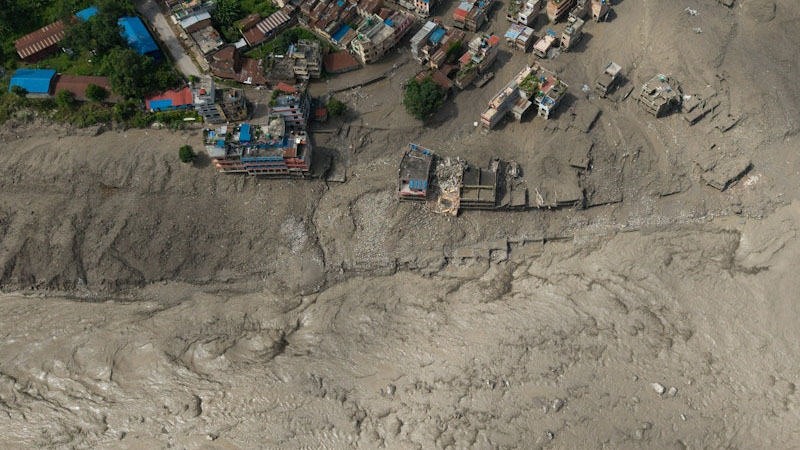
Assets such as large projects, factories or important structures are generally covered by insurance. When such assets are damaged, the insurance company is required to pay compensation according to the terms of the contract. In other words, insurance helps individuals and organisations cope with financial losses in the event of a major accident or disaster.
To avoid having to pay the entire amount alone in the case of large losses, insurance companies also seek assistance from other larger insurance institutions. This arrangement is called reinsurance. It increases the capacity to pay compensation during major disasters. However, if the scale of losses is very high, pressure may build on small and medium-sized insurance companies.
For ordinary people, the opportunity to obtain insurance benefits may be limited. In Nepal, many people’s homes and small businesses are still not covered by insurance. As a result, many families affected by the floods may have to depend on government assistance and relief.
Meanwhile, the Government of Bangladesh has expressed solidarity with Nepal over this disaster. In a message sent to Nepal’s Prime Minister Balendra Shah, Bangladesh’s Prime Minister Tarique Rahman has expressed sympathy for the people of the country. He has also stated that Bangladesh is ready to provide necessary assistance in rescue and relief operations.