
Serbia’s Insurance Sector amid Political Uncertainty
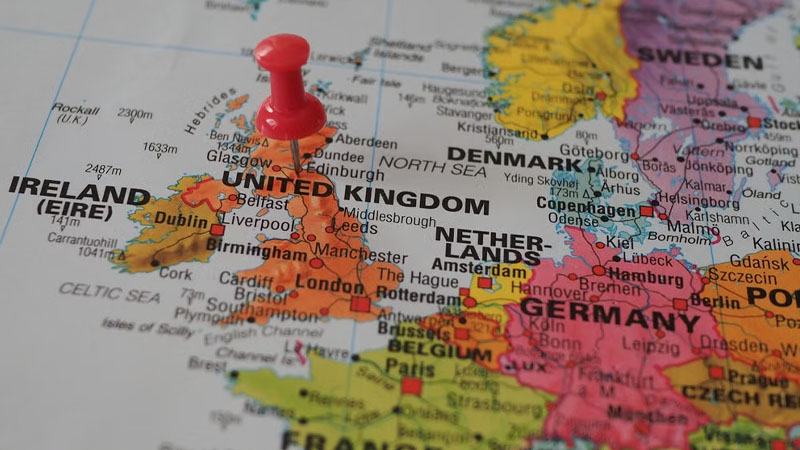
Int'l Insurance Desk: Following President Aleksandar Vučić’s resignation and the prospect of early elections, Serbia’s insurance sector is now facing new questions about policy continuity, investor confidence, and future planning. In the changed political environment, the key issues under discussion are how consistent the sector’s regulatory framework, business environment, and long-term development activities will remain.
This change could affect business decisions, investment plans, and the long-term operations of companies. At the same time, the use of technology in Serbia’s insurance sector, increasing competition, and initiatives to align with European standards are also gaining importance.
According to data from the National Bank of Serbia (NBS), total premium income in the country’s insurance sector in 2024 was approximately 177.4 billion Serbian dinars (more than about 1.5 billion euros). This income increased by 14.3 percent compared to the previous year. During the same period, insurance sector income accounted for about 1.8 percent of the country’s gross domestic product (GDP). Per capita insurance premium stood at approximately 229 euros.
The main pillars of Serbia’s economy are manufacturing, automobile production, agriculture, the services sector, and industries dependent on foreign investment. Trade with European Union (EU) countries is one of the main components of the country’s economy. Rising incomes and growing financial awareness could also increase demand for insurance products.
However, Serbia’s insurance sector is still dependent on non-life insurance. According to 2024 data, approximately 82.3 percent of total insurance premiums came from non-life insurance. This includes motor insurance, property insurance, health insurance, and business risk insurance. On the other hand, the share of life insurance was only 17.7 percent.
The low share of life insurance is due to limited public awareness of insurance, weak long-term savings habits, and relatively lower acceptance of life insurance as a means of savings and financial security. Although the expansion of life insurance in Serbia remains slower compared to developed European countries, there is still room for growth in this segment.
According to 2024 data, a total of 20 insurance and reinsurance companies operated in Serbia’s insurance sector. Of these, 16 companies were directly engaged in insurance activities and 4 companies were active in the reinsurance business. Among the direct insurance companies, 4 offered only life insurance, 6 offered only non-life insurance, and 6 provided both life and non-life insurance services.
Life insurance companies supply products focused on life protection and long-term savings. On the other hand, non-life insurance companies are more active in motor, property, health, accident, and business risk insurance.
A few large companies have a strong influence in Serbia’s insurance sector. The state-owned Dunav Osiguranje holds the top position with approximately 26 percent market share. In addition, Generali Osiguranje Srbija, DDOR Novi Sad, Wiener Städtische Osiguranje, and other international companies are also active in the sector.
The strong position of large companies creates stability in the sector on one hand. On the other hand, it is also a matter of discussion regarding the entry of new companies, increased competition, and the introduction of new types of insurance products.
The main regulatory body of Serbia’s insurance sector is the National Bank of Serbia (NBS). The institution oversees the licensing of insurance companies, their financial capacity, protection of policyholders’ interests, and supervision of company operations.
To align with EU standards, Serbia needs to improve insurance sector rules, transparency, and consumer protection. There is particularly room for further improvement in risk management, companies’ financial capacity, and information disclosure.
From the perspective of financial strength, Serbia’s insurance sector is currently in a solid position. According to data from the National Bank of Serbia, the sector’s capital adequacy ratio in 2024 was 213.5 percent. However, if political uncertainty continues for a long time, issues such as investment flows, business planning, inflationary pressure, and cybersecurity could become challenges for companies.
The use of technology is creating new opportunities in Serbia’s insurance sector. Companies are trying to improve services through online policy sales, digital claim receipt and settlement, and analysis of customer data. However, compared to advanced European countries, there is still room for further improvement in Serbia’s digital insurance services.
Despite political changes, Serbia’s insurance sector has maintained its growth trajectory. However, the future progress of the sector will depend on political stability, regulatory continuity, the use of technology, and the ability to make insurance services easily accessible to the general public.

.jpg)

.jpg)