Turkey vs Israel: Who Rules the Mediterranean Insurance Industry?
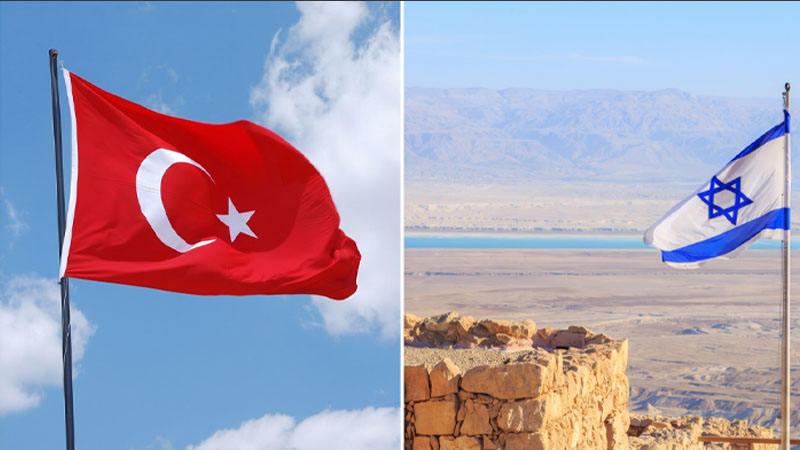
Mashrukh Khan: Turkey and Israel offer insurers two distinct propositions in the broader Middle East and emerging Europe space. One is a larger, faster expanding market in nominal terms still building penetration from a low base amid high inflation and regulatory evolution. The other is a more mature, higher density market with steadier growth, deeper household coverage and greater product sophistication.
Turkey’s insurance sector generated about TRY 1.22 trillion in premiums in 2025, equivalent to roughly $24 to $26 billion depending on exchange rates. That represented nominal growth of nearly 46 percent, or about 6.5 percent when measured in euros, according to the Insurance Association of Türkiye. Non life lines accounted for the bulk of volume, led by motor, fire and natural disasters, and health, while life premiums jumped nearly 80 percent. Israel’s market is estimated in the $22 to $24 billion range for 2025, with forecasts pointing to modest expansion toward $28 to $30 billion by the early 2030s at compound annual rates of roughly 3.5 to 4 percent. In absolute terms the two markets are now comparable in size, though Turkey’s rapid nominal expansion has closed much of the previous gap.
Growth paths differ sharply. Turkish premiums continue to rise well ahead of inflation in several segments, supported by expanding health cover, compulsory motor business and a rebound in life and pension products. Industry leaders target penetration of 5 percent of GDP by 2030, up from around 1.8 to 2.5 percent currently. Israeli growth is more moderate and structural, driven by supplemental health, motor telematics, unit linked life savings products and rising demand for cyber and liability covers. Demographic stability, high employment and a sophisticated regulatory environment underpin steady demand rather than explosive percentage gains.
Penetration and density underscore the contrast. Turkish insurance density remains low at roughly $270 to $280 per capita, with premiums equivalent to less than 2 percent of GDP in recent years. Israeli density exceeds $2,300 per person and penetration stands near 4 percent of GDP, reflecting broader household participation in both life and non life products. Israel’s market therefore offers higher spending power per customer even if absolute premium pools are similar.
Turkey’s advantages lie in scale potential, a young population, rising middle class demand and ongoing regulatory efforts to deepen coverage. Health insurance has gained share, life production is accelerating, and digital distribution is expanding. Challenges include high inflation that complicates pricing and claims, currency volatility, concentration among leading carriers, and the need to convert strong nominal growth into sustainable real profitability and higher real penetration.
Israel’s strengths rest on higher current density, established demand for retirement savings, supplemental health and sophisticated commercial covers, plus a developed insurtech ecosystem. Compulsory motor provides a stable base, while cyber, liability and private health lines offer growth. Margin pressures arise from claims inflation, reinsurance costs after regional events, and intense competition among the major domestic groups that control a large share of premiums. Distribution remains agent heavy but digital channels are gaining ground.
Both markets operate against a global backdrop of slower premium expansion. Swiss Re projects worldwide real growth of only 1.3 percent in 2026 and 1.6 percent in 2027. In that environment Turkey stands out for its absolute expansion and catch up opportunity, while Israel offers denser coverage, higher per capita spending and more predictable product demand.
Insurers must weigh Turkey’s larger growth runway and rising volume against Israel’s higher density, greater product maturity and more stable economic backdrop. Neither path automatically delivers superior returns. Underwriting discipline, accurate pricing in inflationary conditions, distribution efficiency, claims management and capital strength will determine long term profitability in both markets.