Unemployment Insurance Emerges as a Key Stabiliser in Economic Crises, IMF Study Finds
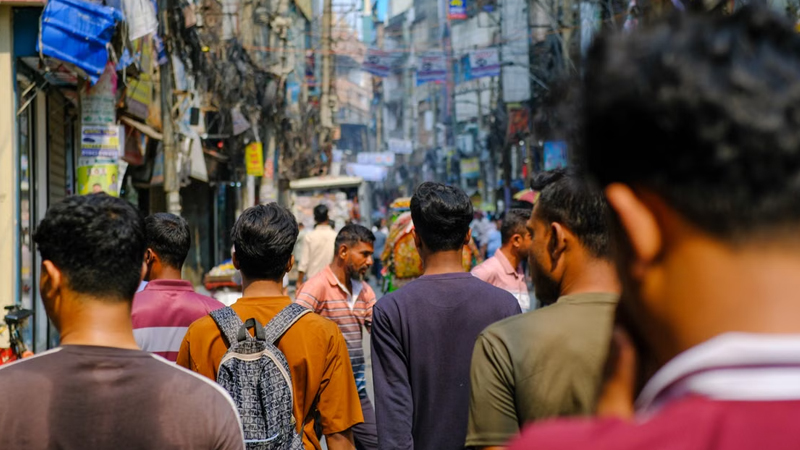
Int’l Desk: The global economy is currently facing a prolonged period of uncertainty. Wars, rising inflation, higher energy prices, debt pressures and rapid technological changes are all putting pressure on both advanced and developing economies. Many developed countries are trying to control inflation for a long time by keeping interest rates high. Developing countries at the same time are struggling more because of limited fiscal space and higher debt risks.
In this situation, a recent study conducted by the International Monetary Fund (IMF) highlights that unemployment insurance can play a key role as an automatic economic stabiliser. The research says that the income protection systems, especially unemployment insurance, help reduce the impact of economic shock on households and keep overall demand in the economy more stable.
The study explains that today’s economic shock is not only more frequent but also more diverse than in the past. Because of this, traditional fiscal support policies do not always produce the same result in every situation. Economic crises in different ways affect people. Some lose their jobs completely, some lose part of their income and others keep their jobs but reduce spending due to uncertainty about the future. This variation makes it difficult for a single policy factor to work equally well for everyone.
To better understand this effect, the IMF used an advanced economic model that divides households into two main groups. One group is described as ‘hand-to-mouth’ households, who spend most of their income immediately and have very little savings. The other group is ‘buffer-stock savers,’ who depend on savings to manage economic risks. These two groups respond differently to economic shocks, which explain why policy impacts can vary widely.
The study compared three policy factors under the same budget conditions: unemployment insurance, targeted cash support and universal cash transfers. Among these, unemployment insurance was found to be the most effective. It not only replaces income for people who lose their jobs but also reduces uncertainty for those still employed. As a result, consumer spending remains more stable, helping the economy recover faster during downturns.
The research also found that unemployment insurance is more cost-efficient compared to other options. Expanding unemployment insurance needs less fiscal pressure compared to targeted cash assistance and universal cash transfers, which are more expensive to execute at the same level of support.
The findings are particularly important for Asia, where the social safeguard system remains limited in many countries. According to data from the International Labour Organization (ILO), only around 14 percent of Asia's unemployed people and the Pacific region receive formal cash support. This means the majority of workers are still outside formal unemployment protection systems.
Many countries, the unemployment insurance system is either weak or incomplete. While countries such as Japan and South Korea have relatively stronger systems, many countries in South and Southeast Asia still lack comprehensive coverage. As a result, workers in these regions are more exposed to income loss during economic downturns and government support remains limited.
Social safeguard spending also shows large differences across regions. In Asia, average social protection spending is around 7 percent of GDP, while advanced economies spend significantly more. In many countries of South and Southeast Asia regions, this spending is below 3 percent of GDP, making income protection systems weaker and less effective during crises.
The IMF study also highlights an important behavioral effect. Unemployment insurance works as a ‘confidence protection system.’ It lessens fear about future income loss, which helps households maintain normal spending patterns. When people continue to spend, overall demand in the economy remains stable. This helps businesses stay active and reduces pressure on the labour market.
The IMF research suggests that unemployment insurance is not only a social safety net but also a powerful macroeconomic stabiliser. It helps safeguard household income, supports consumer demand and speeds up economic recovery during crises. For many developing economies, especially in Asia, strengthening unemployment insurance systems could be a key move toward building more resilient economies in an increasingly uncertain global environment.
.jpg)